A chef's course, rebuilt for
celiac and severe allergies.
Eight seats, hidden in Kagurazaka.
No oil, no stock — salt and miso only.
神楽坂、隠れたる八席

Daiki Kobayashi — Founder, WE TABLE
WE TABLE is a Tokyo-based platform for diners with dietary needs — allergic, gluten-free, vegan, and beyond. We curate restaurants, talk to chefs, and design evenings.
WE TABLE began when my son was diagnosed with food allergies.
Today, I am the one who calls the chef in Japanese. Every reservation is a conversation: each ingredient confirmed, each substitution negotiated, each dish rebuilt around what is safe for you to eat.
We keep a map of Tokyo restaurants that welcome dietary restrictions — over 650, open at wetable.jp. Our Instagram community at @wetable_jp has grown past ten thousand.
We exist so that your time in Tokyo is spent eating what you want — not searching for what you are allowed.
Clay pots. Charcoal. Four hours over the fire.
A quiet door at the end of a Kagurazaka alley. Eight seats at a counter. Reservation only.
The chef cooks in clay pots, set over charcoal for four hours. No oil. No stock. No shortcuts. The fire and clay do the cooking — the seasoning is yours: salt and miso, placed beside you, added by your hand alone. The vegetables move from clay to clay, then to you.
It is one of the simplest cuisines in Tokyo. That is exactly why it can hold the most complex dietary needs.
This is the chef's course — what he serves on his regular menu, shaped around what you can and cannot eat. We add one dish made only for the evenings we host: a moment that does not exist outside this counter. Every detail is worked through with the chef in advance — careful with what you cannot eat, generous with what you can.
The restaurant's name and exact address are shared after booking is confirmed.
What we will, and won't, promise.
The restaurant is not a gluten-free kitchen. Under Japanese law, no restaurant can promise a celiac-safe meal, and we won't pretend otherwise.
What we do instead: negotiate, separate, substitute, and verify, and then tell you exactly where the lines are, so you decide with open eyes. The final call is always yours. That honesty is the service.
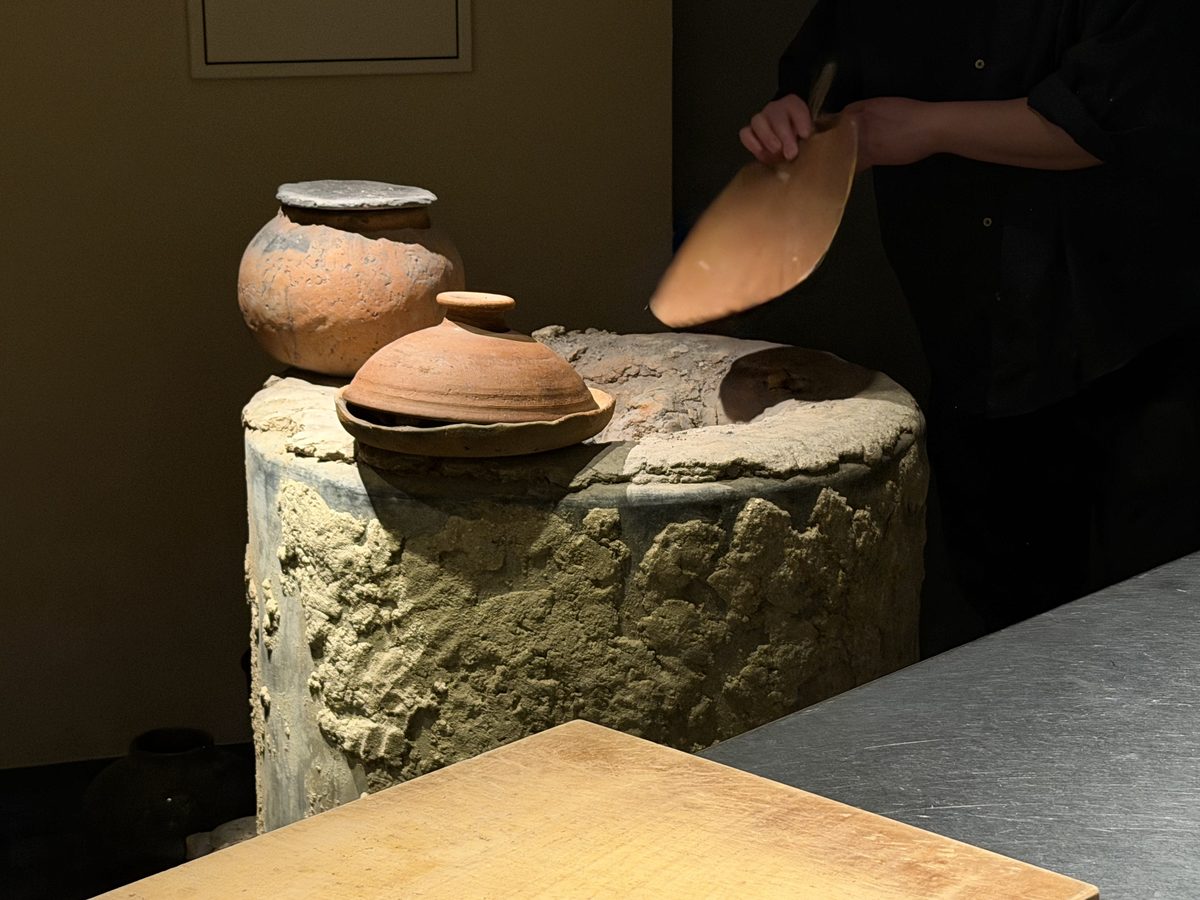
— A clay pot, lifted. The patient work of fire and earth. —
Not a compromise.
A discovery.
Some restaurants are built for people with dietary restrictions. They are designed from the start to welcome vegans, vegetarians, and the allergic. They have English menus. They are kind. They are useful. We send guests to them often.
What we offer is different.
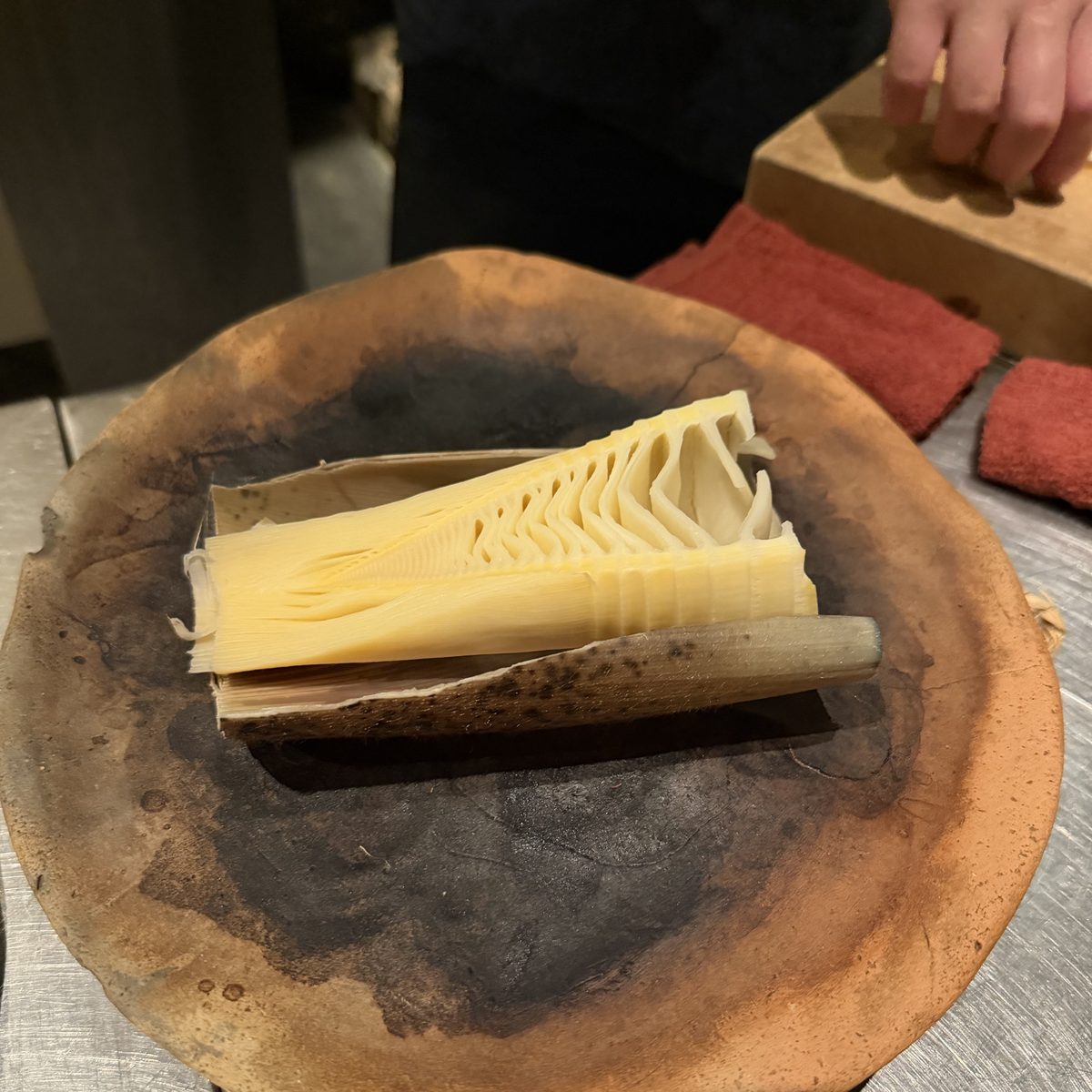
— Bamboo shoot, hand-harvested this morning. Sliced for the evening. —
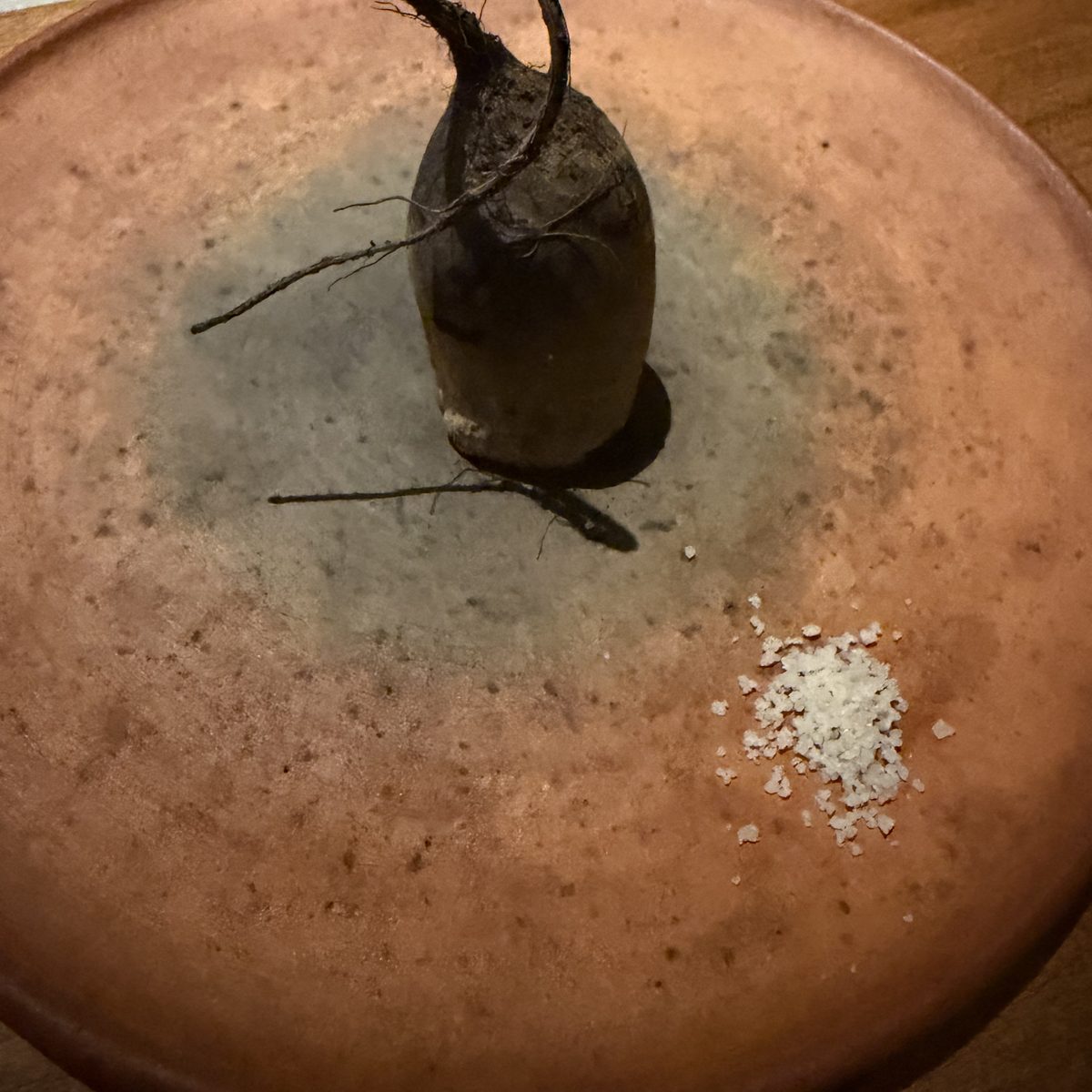
— What remains, when nothing more is needed. —
Where mastery quietly opens.
A chef spends years narrowing his craft. He removes what does not belong — the butter, the stock, the sauce — until only what the ingredient asks for remains. By the end of this work, almost by accident, the food he has arrived at can be eaten by almost anyone.
This is what we look for. Not a kitchen that accommodates you. A kitchen that, by going its own way, simply opens to you.
The chef who began with soil.
He began with a single discipline: the clay and the vegetables drawn from the same soil. Vegetables grown where the clay was dug. Over the years, the circle has widened — clay from Saitama, vegetables from Chiba — but never beyond the country itself. Japanese earth. Japanese roots. A devotion most cooks would call unreasonable.
He kept taking things away. What remained was salt and miso. Nothing else. No oil. No stock. No intervention. Just the ingredient, the fire, and time.
He did not set out to cook for vegans, or for people with allergies. But his method made it possible. The opening was not the goal. It was the result.
Places visitors rarely find.
Tokyo has charming vegan cafés with English menus, made for photographs. They exist for good reasons. But they are not what we offer.
What we offer is the Japan most visitors will never see. A chef who has never sought attention. An eight-seat counter, and a way of eating that even most Tokyoites have never imagined.
This is a place where Japan is still quietly being itself.
we want to offer you the opposite.食の制限を、謝るためのものから、
哲学に触れるための入口へ。
During the meal,
your guide steps away.
This is by design.
The dim counter, the unhurried pace, the chef's hands, the steam rising from the clay — there is a quiet in this room that belongs to you and your companion. A guide narrating in English carries it away.
- WHEN WE ARE WITH YOUWe meet you at the station, walk you through the alleys, and confirm your dietary needs with the chef, in Japanese, at the door.
- WHEN WE STEP AWAYThe meal becomes yours. In place of our voice, we leave a Menu Card in English, written for this night alone — yours to read at your own pace.
Your evening. Your conversation. Your memory.
We remain reachable throughout the evening, ready if you need us.
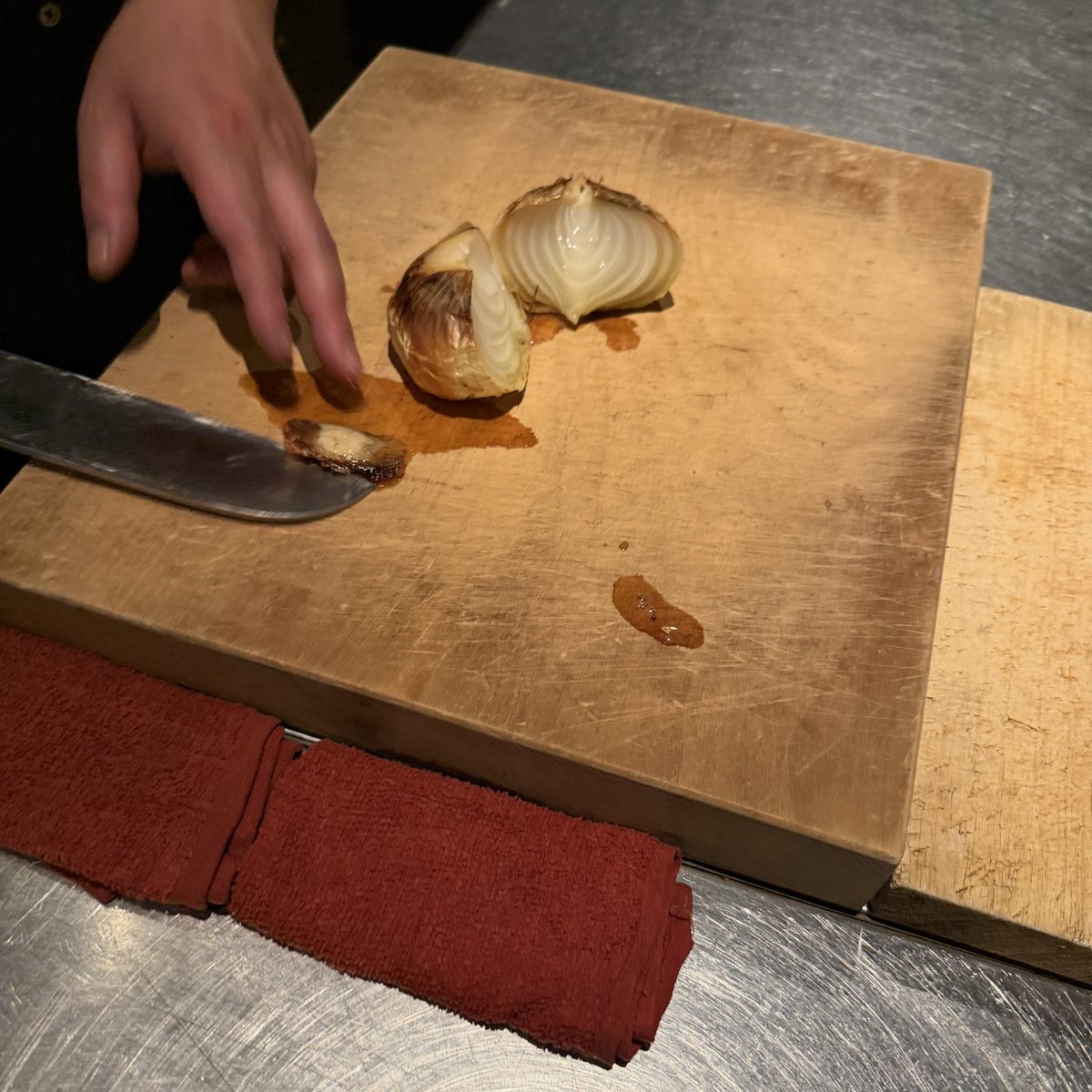
— The chef's hand. A knife. An onion, slow-roasted, brought to the board. —
What it takes
to open this door.
This counter has eight seats, down a quiet Kagurazaka alley. The chef works primarily in Japanese. The reservation, the dietary confirmation, the introduction — all happen in a language a visitor cannot navigate alone.
To eat here, as a visitor to Japan, is not a matter of finding the restaurant. It is a matter of being welcomed in.
650+ restaurants. We chose this one.
WE TABLE has spent years mapping Tokyo restaurants that welcome dietary needs — vegan, gluten-free, halal, kosher, severe allergies. Over 650 of them. As far as we know, the most complete archive in the city.
From that archive, we chose this counter. Not because it is the easiest to work with. Because it is the most uncompromising.
We speak to the chef for you. In Japanese.
Before we call the chef, we ask you. After your first reply, we send a structured dietary profile — designed for the way Japanese kitchens think. Allergies by level, intolerances by trigger, ethical and religious paths. Every line precise enough for a chef to cook by.
Then we call the chef. Not to read out a list. To design your evening with him — each restriction, each ingredient, each possible substitution, thought through inside the logic of his cooking.
This is not translation. It is the work of knowing what to ask, in what order, and with what care. It takes the chef's language, his craft, and the time to know both.
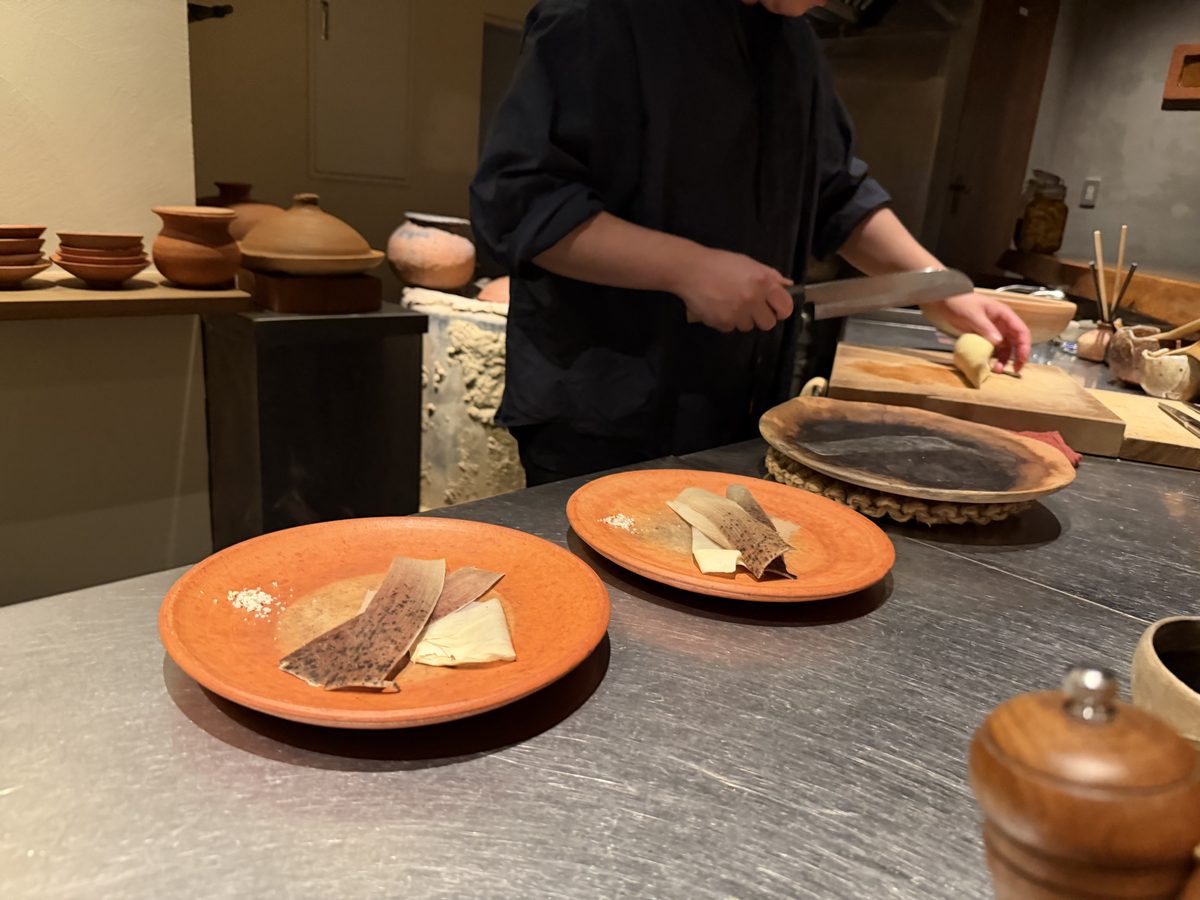
— Behind the counter, the chef builds the evening, plate by plate. —
We are looking for our first three tables.
WE TABLE JOURNEY is just beginning. We have no reviews to show you yet — only the work itself. So we are looking for our first three parties: the guests whose evenings will shape what this becomes.
In exchange for your voice — a few photographs, a short handwritten review at the table, and honest feedback within two weeks — we offer our inaugural rate: ¥10,000 off each course, per guest.
| Course | Regular | Inaugural |
|---|---|---|
| Plan A — Vegetables only | ¥24,000 | ¥14,000 (≈ $87) |
| Plan B — Vegetables and fish | ¥28,000 | ¥18,000 (≈ $112) |
| Plan C — Vegetables, fish, and meat | ¥35,000 | ¥25,000 (≈ $155) |
Three tables only. When they are taken, this invitation quietly disappears.
Prefer the regular rate, without the conditions? Simply book as usual — both doors are open.
Three courses.
Your evening, your choice.
Whichever course you choose, it has been composed for WE TABLE guests alone. Choosing vegan here is not a compromise. It is simply a path.
Plan A — Vegetables only
Slow-fired vegetables from the clay pot. The origin of the cuisine, in its quietest form.
Plan B — Vegetables and fish
The vegetable world, joined by the fish of the day. The clay and the fire bring out a flavor with nothing in the way.
Plan C — Vegetables, fish, and meat
A single dish of carefully chosen meat joins the vegetables and fish. Available for groups of four or more, with three days' notice.
2–8 guests · An evening, from the station to the last plate · Beverages settled at the restaurant on the night.
USD shown at ¥161 = $1, for reference only.
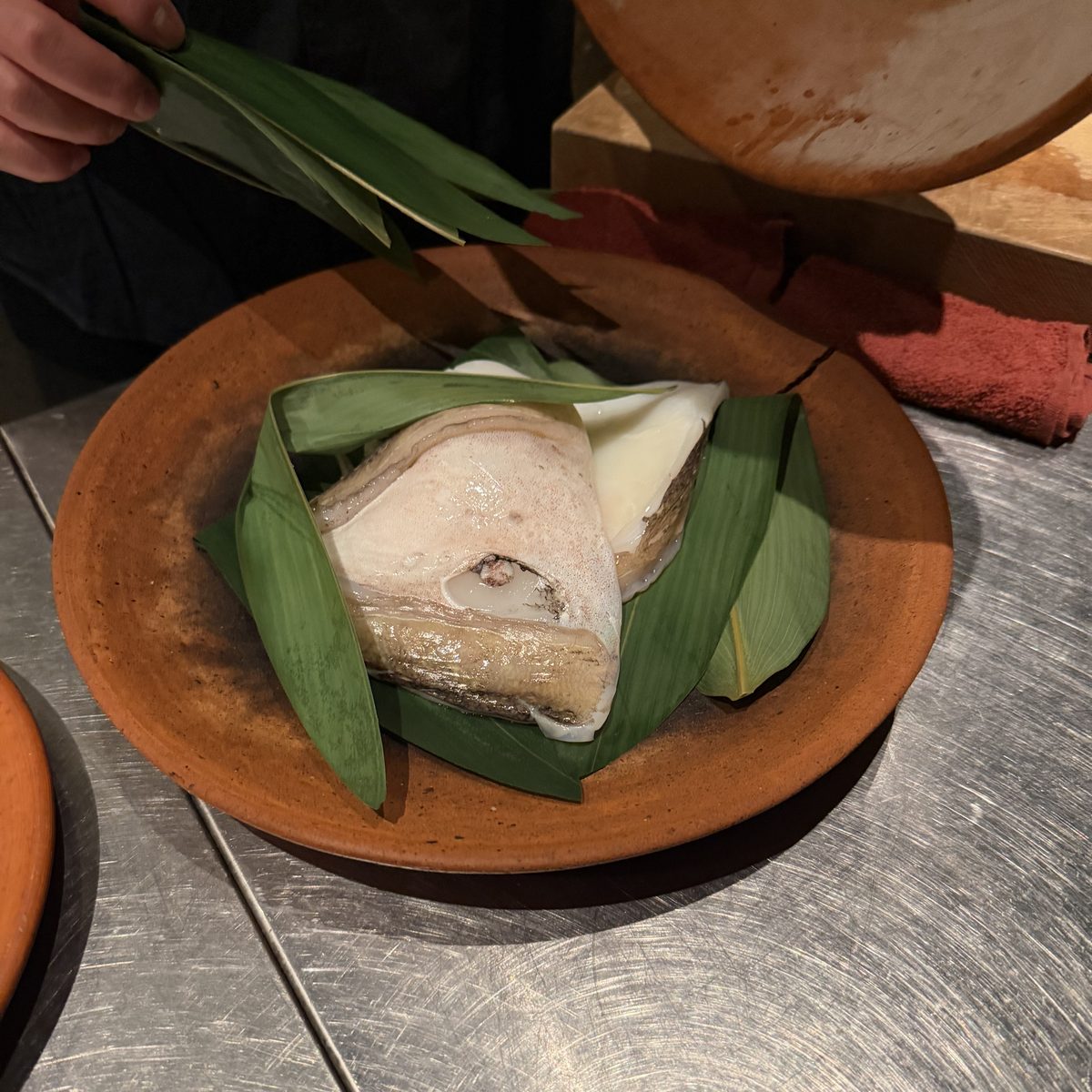
— Fish of the day, wrapped in bamboo, steamed in clay. —
What the evening includes.
Most of the work happens before you sit down.
A meal at the counter is the easy part. The price reflects everything around it — the part you never see, done so that an evening in a kitchen that isn't gluten-free can still be made safe for you.
- i. Weeks of correspondence — We map every restriction in your party, by person, by type, by severity, until nothing is left to assume.
- ii. A written requirements document — Your needs, in medical detail, set down in writing and shared with the chef before a single dish is planned.
- iii. A conversation with the chef — We confirm the small things that decide safety: which koji is in the miso, what tops the dessert, whether the rice can be kept apart.
- iv. A walk through Kagurazaka — We meet you at the station and walk you to the counter through the old lanes, about thirty minutes, with the history along the way.
- v. A menu written for your table — An English menu prepared for your party alone, handed to you at the door: your dishes, your restrictions, named.
- vi. One last check, in person — A WE TABLE welcome drink to begin, and your restrictions confirmed once more with the chef before the first plate.
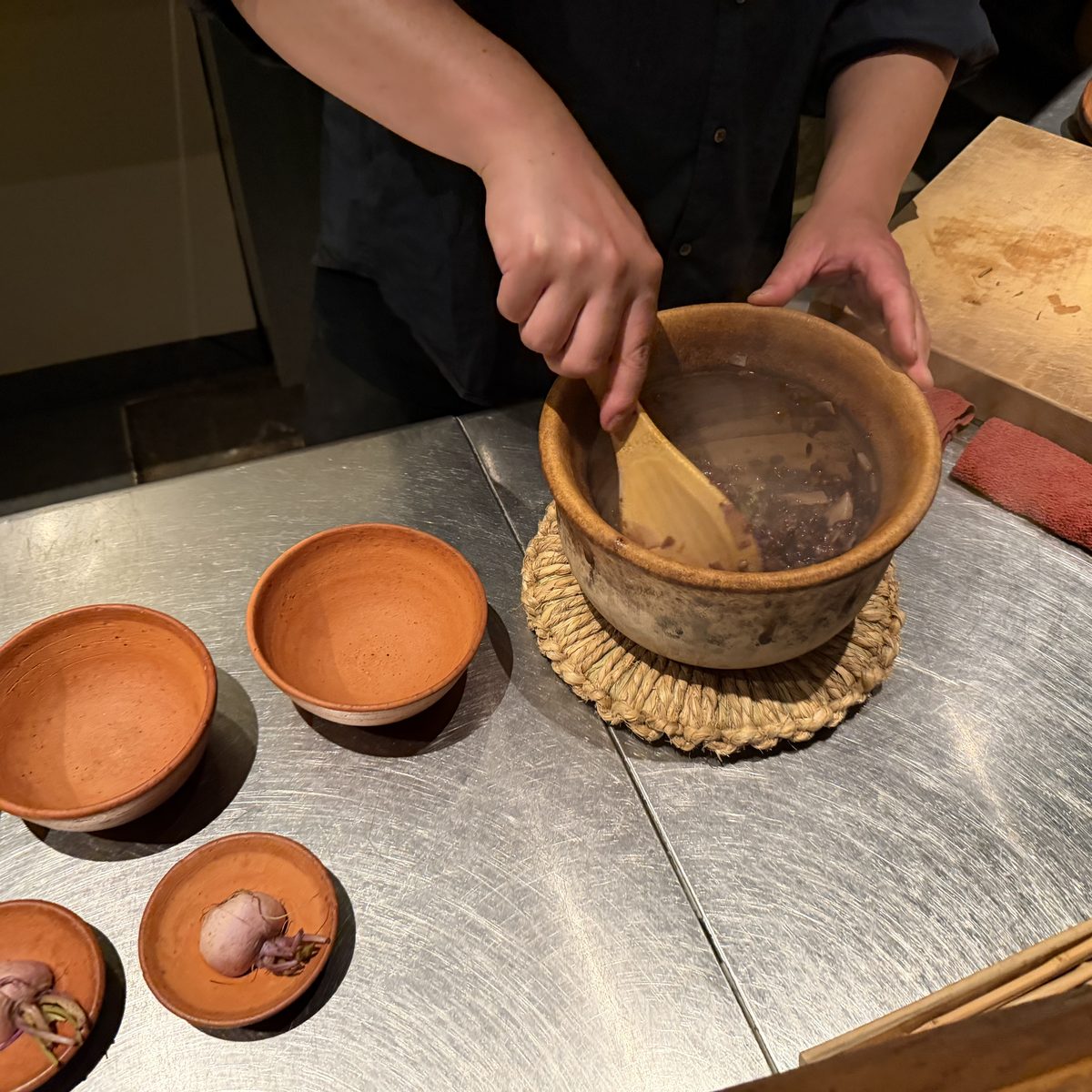
— Each bowl, prepared for a different guest. The same evening, gathered around one fire. —
Your evening — an example.
Your guide meets you at Iidabashi Station.
A familiar face, waiting at the agreed corner.
A walk through the Kagurazaka alleys.
An unhurried walk from the station to the door, through the old streets — with the history along the way, and any question you bring answered here.
You meet the chef.
We have already worked through every detail with him in advance. Here, in person, we confirm your restrictions with the chef once more, in Japanese — a final check, face to face. He greets you. The clay pots are already on the fire.
Your Menu Card is handed to you.
“This page was written for tonight, for you.”
Your guide steps away.
A contact card is left with you. “Call any time.”
The room is yours.
You, your companion, and the chef. The Menu Card in your hand. The slow rise of steam from the clay. Each dish, its own quiet conversation.
The bill, and the walk back.
If you wish, your guide returns to walk you to the nearest station.
“Say it to your companion.
Not to us.”
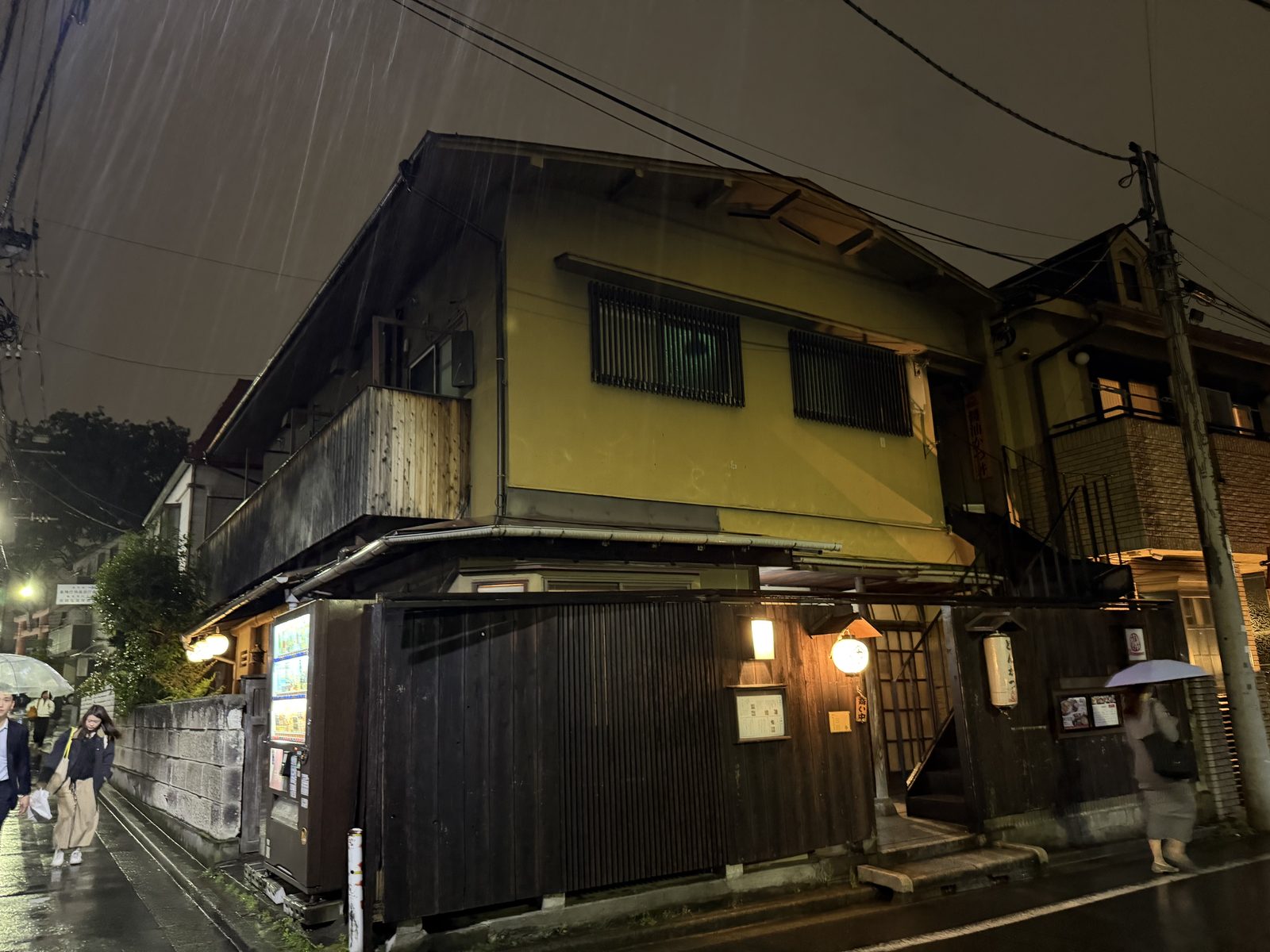
— Kagurazaka, after dusk. Lantern light, wet stone, a door waiting. —
Diets we are built around.
Vegan, halal, and other requirements are planned the same way.
* Food Allergies, Celiac Disease & Gluten-Free: We disclose ingredients and allergens as fully as possible before your evening. The chef cooks with cross-contamination minimised, though complete kitchen separation is not possible. For severe allergies or celiac disease, please write to us before booking.
* Halal: Certified Halal is not possible, but we can prepare your evening with Muslim-friendly ingredients. Please discuss with us in advance.
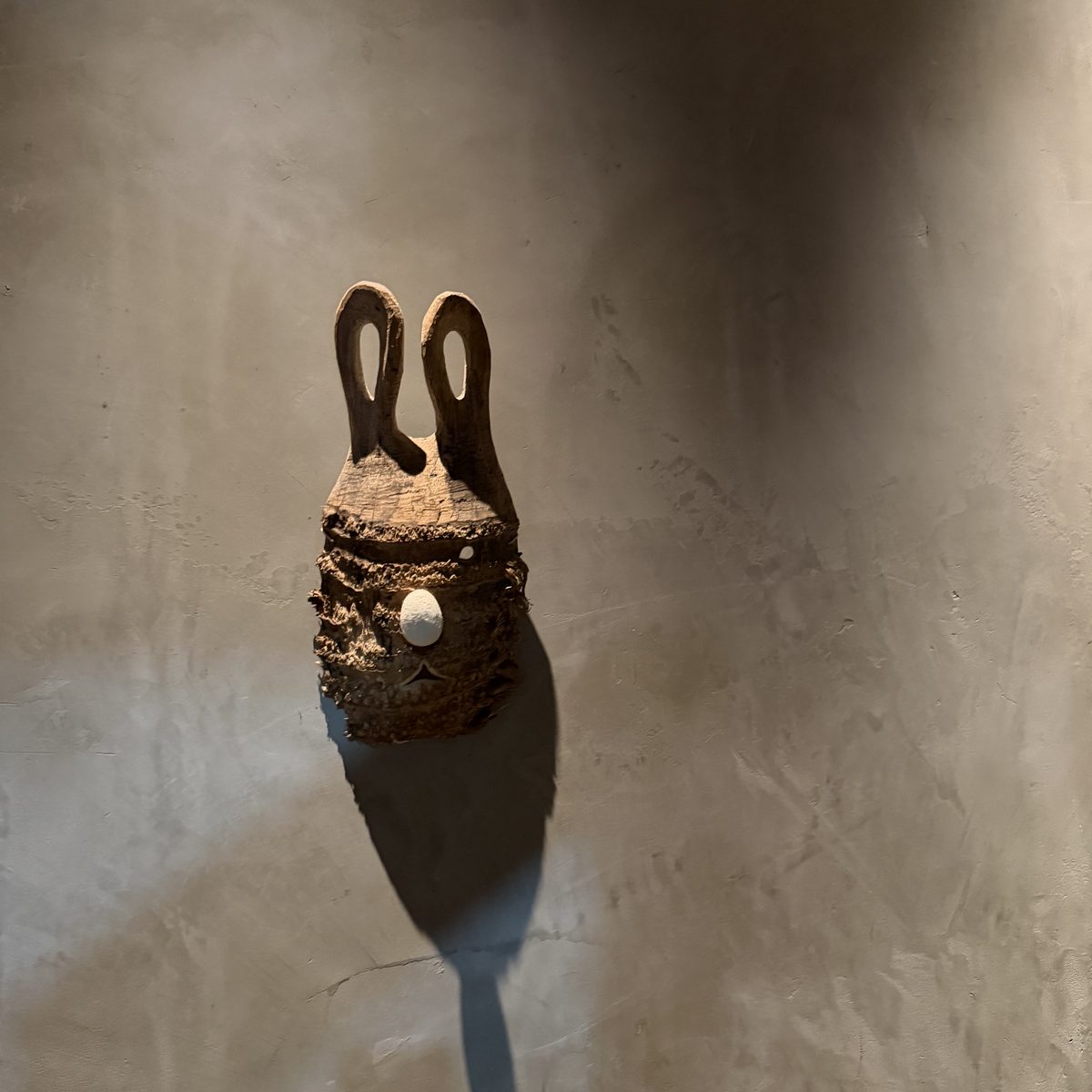
— A small figure on the wall. Light, shadow, and a long silence. —
Honest, not perfect.
The information we share is what the restaurant gives us. We cannot guarantee what they do not disclose, nor account for human error. What we can promise is this: we will tell you everything we know, and let you decide.
Some answers,
before you ask.
How do I book?
A request form is the easiest way to begin. Within 1–2 business days, you'll hear from us personally — with a detailed dietary profile, built to capture every nuance of your needs. Once you've filled it in, we design your evening with the chef, and confirm your date and course. Your reservation is held when we confirm with the chef.
We ask for at least one week's notice — ideally two — so we have time to design your evening with the chef. Shorter notice may be possible. Write to us, and we will see what can be done.
When will I know the name and address of the restaurant?
The exact name and address are shared after your reservation is confirmed. This is at the chef's request, and ours — to keep the counter quiet, and to ensure that those who come here have been welcomed in. You will receive the details in writing, in the days leading up to your evening.
What is your cancellation policy?
Payment is due three days before your evening. This is when the chef begins sourcing ingredients for your dinner alone.
Until the payment deadline, cancellations are refunded in full, minus Stripe processing fees. After the deadline, the reservation is non-refundable.
Can I see the menu in advance?
What we can share, before the evening, is the structure — the number of dishes, the rhythm of the meal, and a sense of what you may meet. The full menu is the printed card waiting for you at the door.
Can guests with different diets dine together?
Yes. A vegan, a pescatarian, and an omnivore can sit side by side at the same counter, each with a course shaped for them. The chef builds the evening to feel like one shared meal, not three parallel ones.
Why is the guide not at the table during the meal?
The room is small, the pace is slow, and the moments that matter belong to you and your companion. A guide narrating each dish would carry them away. We stay close — reachable throughout the evening — but we keep the room quiet. (See: A Design Choice.)
How do you handle severe allergies and celiac disease?
Severe allergies and celiac disease are reviewed personally before booking. We call the chef, confirm what is possible, and what is not. Cross-contamination cannot be eliminated entirely, so we will tell you honestly whether your needs can be met here.
How are payments handled?
The course fee is settled by credit card through Stripe, no later than three days before your evening. Any additions on the night — such as beverages — are settled at the restaurant, in cash or by card. No tipping is expected. No tipping is accepted.
Begin your evening.
Send us your dietary needs, the date you have in mind, and the course you would like. We will reply within 1–2 business days.
When does payment happen?
お支払いは、いつ?
Not now.
Sending the request costs nothing, and commits you to nothing.
- You send the request — free, no obligation
- We design your evening together — dates, courses, every dietary detail. Still free.
- Your reservation is confirmed with the chef — still free
- Once confirmed, we send a payment link (Stripe) — due three days before your evening (18:00 JST — see Cancellation & Refund Policy for details) — the only money that ever moves. Until this deadline, cancel for any reason, refunded in full (minus processing fees).
- After payment, the chef begins sourcing ingredients for your table alone — from here, the evening is yours, and non-refundable.
You decide with open eyes, at every step.
We reply within 1–2 business days.
Not sure yet? Ask us anything.
Severe allergy? Celiac? A companion with different needs? Tell us your situation — we'll tell you honestly whether this counter is right for you, before you book anything. We reply within 1–2 business days.
Prefer email? Write to us at info@wetable.jp