
Is Sukiyaki Gluten Free? Warishita, Fu and the Raw Egg
 Daiki Kobayashi · Founder of WE TABLE
Updated · 11 min read
Is sukiyaki gluten free? Where the wheat and egg come in
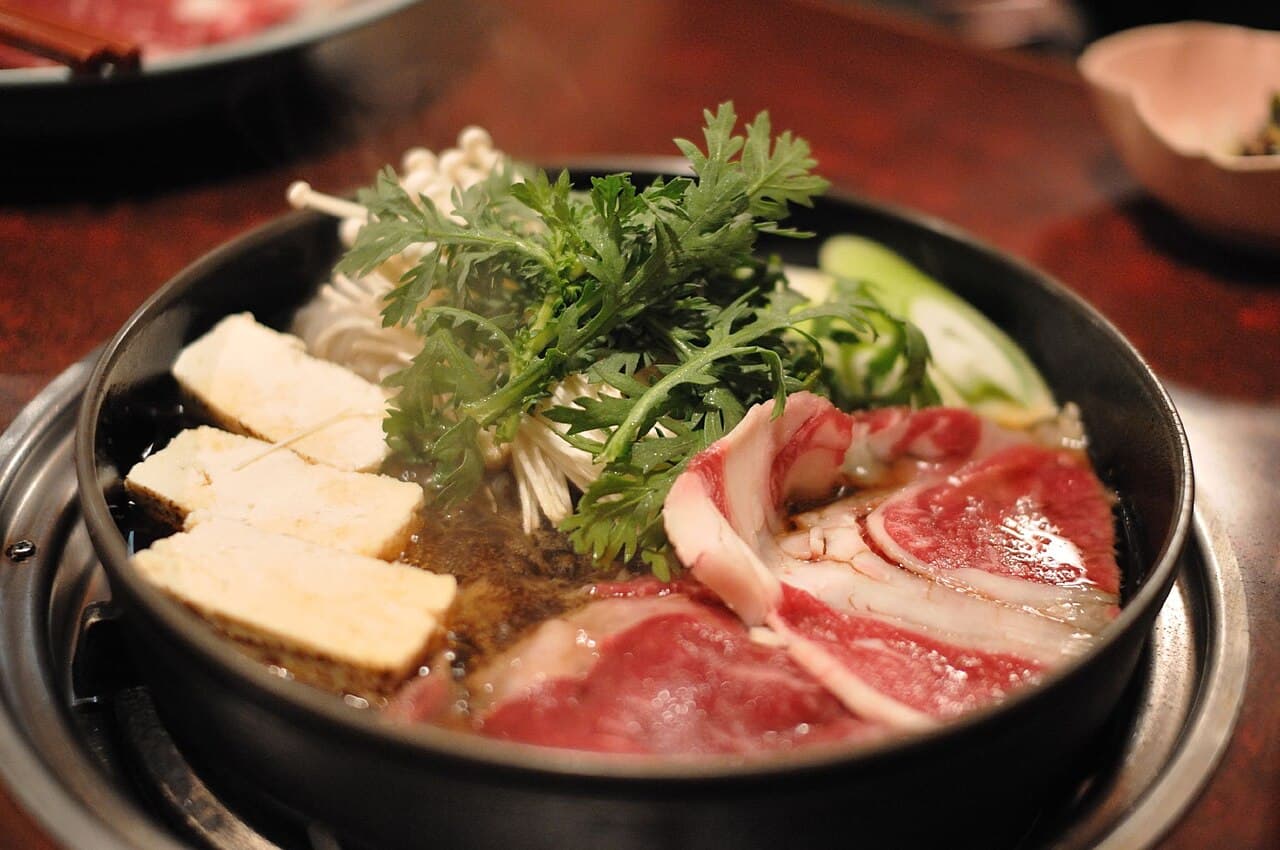
Sukiyaki is a hot pot. Thin slices of beef are simmered with green onion and tofu in a sweet and salty sauce. The pot itself is beef, vegetables and tofu. The wheat and egg come in through the seasoning, the side ingredients and the way you eat it.
| Where | What it contains | What to ask |
|---|---|---|
| Warishita (the sukiyaki sauce) | Wheat (from the soy sauce) | Can you make it with soy sauce that contains no wheat? |
| Fu (wheat gluten) | Wheat (it is gluten itself) | Please leave out the fu |
| Udon at the end of the meal | Wheat | Can you serve something other than udon at the end? |
| Raw egg for dipping | Egg | No egg, please |
| Beef fat | Fat from cattle (not a dairy product) | — |
| Green onion, tofu, shirataki (konjac noodles), shungiku (chrysanthemum greens), shiitake | No wheat, egg or dairy in the ingredients themselves. But they are simmered in the warishita | Depends on what is in the warishita |
The one people miss is fu. To make fu, you wash wheat flour dough in water to rinse away the starch. Then you bake or dry the gluten that is left. In other words, fu is a lump of gluten. Like the binder in soba, you cannot tell from the name that it is wheat. And it is a very normal ingredient in sukiyaki.
Then there is the warishita. It is a simmering sauce of soy sauce, mirin, sugar and sake, and it is the heart of the sukiyaki flavor. Most Japanese soy sauce is brewed from soybeans and wheat, so the warishita contains wheat (see soy sauce and gluten in Japan).
Teriyaki, simmered dishes, most of the Japanese food built on dashi: all of it lies downstream on the river of soy sauce.
Sukiyaki is downstream on that river too.
Before sukiyaki: the country that did not eat meat
The history of sukiyaki starts with this: for a long time, Japan officially did not eat meat.
In 675, Emperor Tenmu banned eating cattle, horses, dogs, chickens and monkeys during the farming season. Buddhist teaching added to this. For a long time, eating the meat of animals became something people did not do openly.
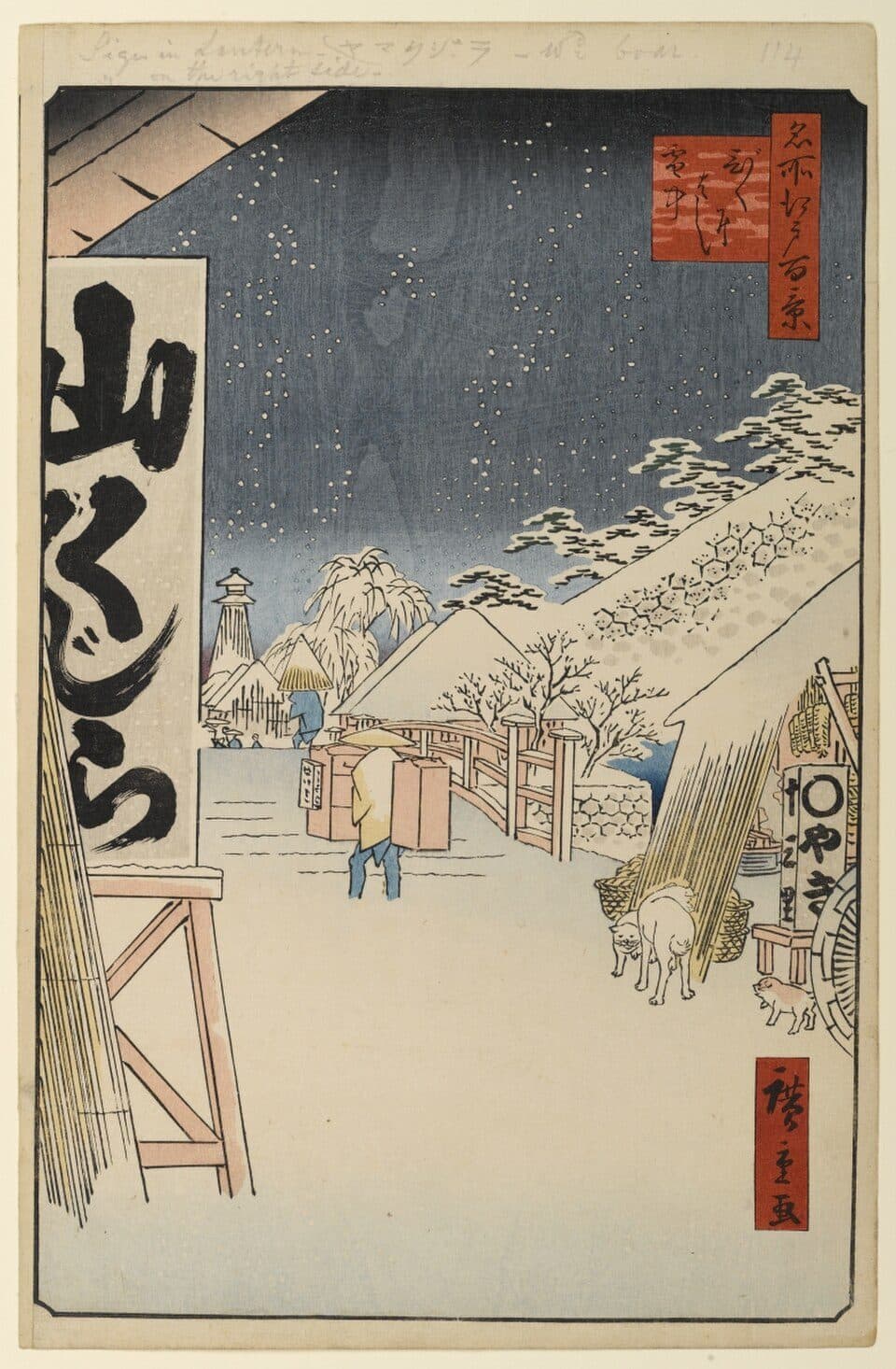
But people still ate meat. Edo, the old name of Tokyo, had shops called momonjiya that sold the meat of wild animals. They served it as medicine, to build strength after an illness. This was called kusurigui (“eating as medicine”). Wild boar meat was called yama-kujira (“mountain whale”). Whales were thought of as a kind of fish, so the idea was that a whale from the mountains was fine to eat.
“Not eating gyunabe? You are behind the times”
Things changed in the Meiji era. In the 12th month of Meiji 4 (January 1872 in the Western calendar), the news spread that Emperor Meiji had eaten beef. Almost overnight, eating meat went from an old-fashioned habit to a sign of the new age. Part of the reason was that Japan needed to eat Western food at dinners with Western nations.
In the city, gyunabe, beef simmered in a pot, became a huge trend. Kanagaki Robun’s book Aguranabe (full title Ushiya Zodan Aguranabe, “Beef-shop small talk”), published in 1871–72, has a line that says, roughly, “If you don’t eat gyunabe, you’re not civilized.” In other words, anyone who did not eat gyunabe was behind the times. By around 1877, Tokyo is said to have had 488 gyunabe shops.
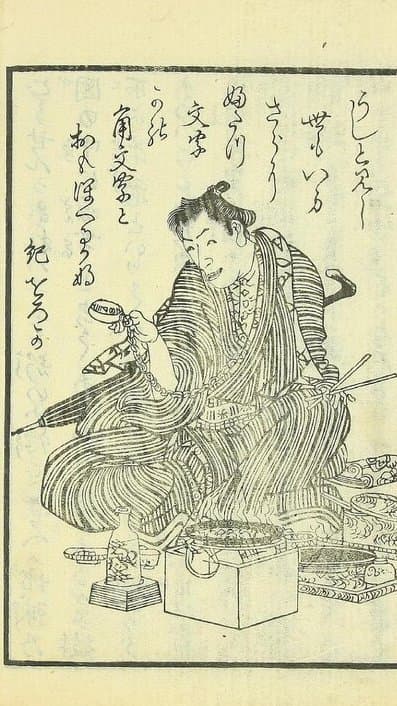
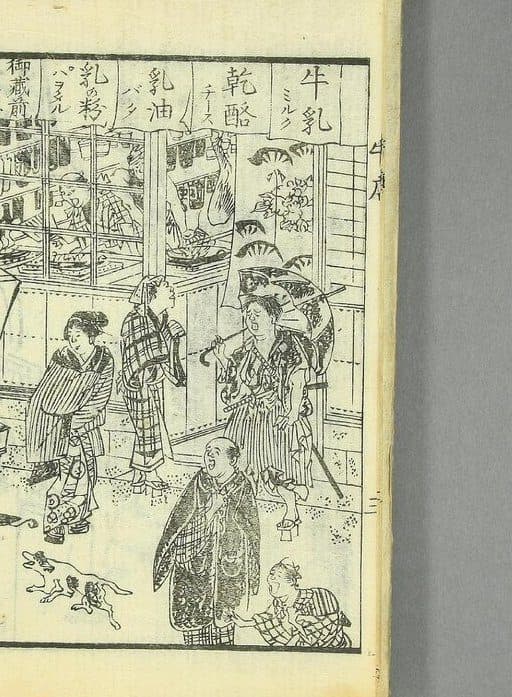
The illustration at the top of this page comes from the same book. A horse carriage drives past, and the shop front has signs for milk, cheese and butter. Beef and dairy came into Japanese towns at almost the same time. Today, milk is one of the major allergens in Japan. It is strange to think that this story is only about 150 years old.
Kanto vs Kansai sukiyaki: warishita, or sugar and soy sauce
Sukiyaki is made in two ways, in the east and in the west of Japan.
- Kanto style (Tokyo and the east): beef and vegetables are simmered in warishita, a mix of soy sauce, mirin, sugar and sake. This way of eating comes from gyunabe.
- Kansai style (Osaka, Kyoto and the west): beef fat is spread in a hot iron pot and the beef is grilled. Then sugar and soy sauce are poured straight on to season it.
At first, the dish was called “gyunabe” in Kanto and “sukiyaki” in Kansai. A well-known story says the name comes from suki, a farm spade, because people grilled meat on a spade instead of a pot. Encyclopedias, however, say this story is not correct. Still, the cooking method of grilling on an old spade does appear in an 1832 book on cooking whale meat (鯨肉調味方). In Tokyo, the signs of gyunabe shops changed to “sukiyaki shop” around the middle of the Taisho era (1912–1926). This happened after the name “sukiyaki shop” came to mean a restaurant serving high-end beef.
For people with dietary restrictions, note that both styles use soy sauce. In Kansai style, the soy sauce and sugar are poured right in front of you. So it may be easier to ask for a wheat-free soy sauce instead.
A family feast, and a student’s one-person pot
Even in Japan today, sukiyaki is food for a special day: a birthday, passing an exam, a promotion, a night when the family is together again after a long time. When something good happens, a sukiyaki pot goes in the middle of the table. Sushi, yakiniku (Japanese barbecue) and sukiyaki: in many Japanese homes, these three are the classic celebration meals.
When eating out, sukiyaki also counts as a high-end meal. There are not many casual sukiyaki restaurants. Even for Japanese people, going to a sukiyaki restaurant feels like a bit of an occasion.
But sukiyaki also has a much more relaxed side. When I was a university student, I used to make it several times a week. I put store-bought warishita into a small one-person pot. I added vegetables, beef and udon all at once from the start, simmered it, and dipped everything in beaten egg. It was easy, it was delicious, and I got vegetables and meat in one go. A feast dish can also become a staple of living alone. I think this wide range is part of what makes sukiyaki sukiyaki.
The name sukiyaki also crossed the ocean. Kyu Sakamoto’s 1961 song “Ue o Muite Aruko” was released in English-speaking countries under the title “SUKIYAKI.” In June 1963 it was number one on the US Billboard chart for three weeks in a row. Sukiyaki is never mentioned in the lyrics. It is said that the name of the dish was chosen because it was short, easy to remember and sounded Japanese.
Can you make sukiyaki without dairy, egg or wheat?
Yes. Sukiyaki uses almost no dairy to begin with, so there are only two things to remove: egg and wheat.
- Warishita: mix soy sauce that contains no wheat (labeled 小麦不使用, “no wheat used”) with mirin, sugar and sake. Most hon-mirin (true mirin) is made from glutinous rice, rice koji (a rice mold culture) and shochu (a distilled spirit), but check the label to be sure.
- Ingredients: leave out the fu. Beef, green onion, grilled tofu, shirataki noodles, shungiku greens and shiitake contain no wheat, egg or dairy in themselves.
- End of the meal: instead of udon, add rice to make zosui, a rice porridge cooked in the leftover broth.
- Egg: skip the dip and eat it as it is. Some families eat it with grated daikon radish for a lighter taste.
In Japan, dipping sukiyaki in raw egg is normal. On eggs sold in Japan for eating raw, the best-before date shows how long they can be eaten raw. For travelers without an egg allergy, the raw egg itself is often a surprise.
What should you check at a sukiyaki restaurant?
Making sukiyaki at home and ordering it at a restaurant are two different things.
Most sukiyaki restaurants make a large batch of warishita in advance. Not many restaurants keep wheat-free soy sauce yet. Even if each table has its own pot, fu and udon may be cooked in that same pot. At high-end restaurants, a nakai (a server) often cooks the first slice for you at the table. From the outside, you cannot see where that warishita or those chopsticks came from.
If you only need to avoid wheat as an ingredient, you have a good chance of eating sukiyaki if the restaurant agrees to two things: making the warishita with wheat-free soy sauce, and leaving out the fu and udon. It is also worth asking if they can use gluten-free soy sauce that you bring.
If you also need to avoid cross-contact (traces picked up during cooking), check whether they can make a fresh warishita from scratch, and whether the pot is used only for your group. Tell them when you book. This gives the restaurant time to prepare, which is better than asking on the day. I explain how to tell a restaurant about your needs in how to explain food allergies at restaurants in Japan.
Does sukiyaki have egg? Egg and beef allergies
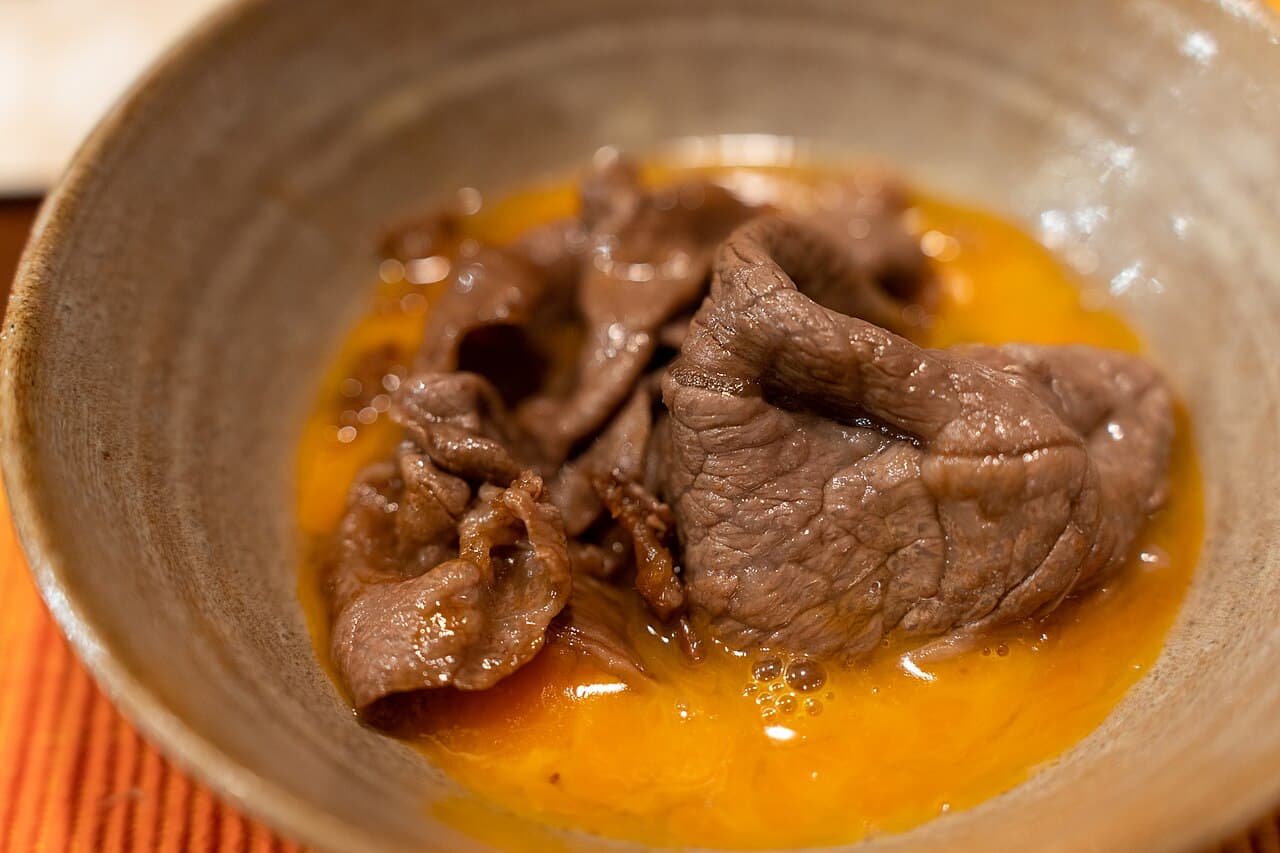
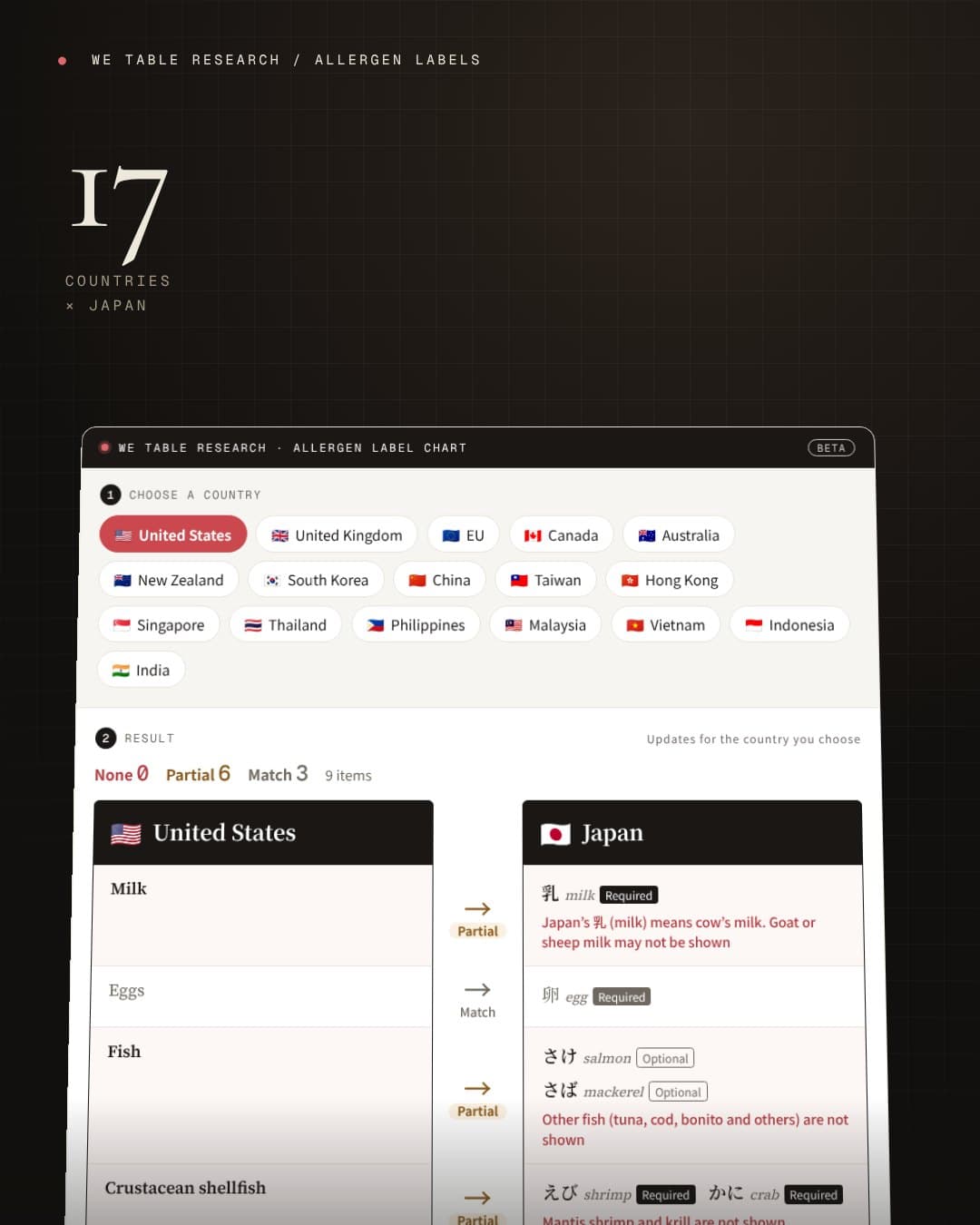
In Japan, egg is one of the items that must be labeled on packaged processed food. Beef is on the list of items that are recommended for labeling. It may not be shown. And neither has a labeling duty on restaurant menus, bento packed on the spot, or side dishes sold loose (Japan’s allergen labeling rules).
With egg allergy, raw egg is said to cause symptoms more easily than cooked egg. The raw egg in sukiyaki goes into your mouth without being heated. If even a small amount causes you symptoms, also be careful of beaten egg splashing at the same table.
Japanese phrases for a sukiyaki restaurant
You can show these phrases to the staff. It is even better if you can tell them when you book.
How we approach sukiyaki at WE TABLE
We do not call any pot “safe.” What we can do is tell you what a kitchen does, and leave the decision to you. Asking for a fresh warishita made from scratch, asking for a separate pot: we want to make all of these requests before you arrive, so that on the night you can simply enjoy the table. That is what JOURNEY (our guided dinners, with a course built around your restrictions) is for.
Read next
Questions people ask
Is sukiyaki gluten free?
Usually not. Almost all soy sauce used in the sauce (warishita) is made with wheat. The fu in the pot is wheat gluten itself, and the udon served at the end is wheat too.
Is sukiyaki sauce gluten free?
Usually not. Sukiyaki sauce (warishita) is soy sauce, mirin, sugar and sake, and most Japanese soy sauce is brewed from soybeans and wheat. It can be made with soy sauce labeled as containing no wheat.
Does sukiyaki have dairy?
Traditional sukiyaki basically uses no dairy. The beef fat used to grease the pot comes from cattle, but it is not a dairy product. Some restaurants have their own twists, so ask if you need to be sure.
Can you eat sukiyaki without raw egg?
Yes. The raw egg is a dip, not part of the dish itself. Some people eat sukiyaki without egg.
Can you make sukiyaki without dairy, egg or wheat?
Yes. Make the sauce with soy sauce that contains no wheat, leave out the fu and the udon, and eat it without egg. At a restaurant, check whether they can give you a separate pot and sauce.
Sources
- コトバンク「牛鍋」(世界大百科事典・精選版日本国語大辞典ほか) (Kotobank: Gyunabe, from Japanese encyclopedias and dictionaries)
- 季刊大林 No.59 原田信男「日本人と食、農業の歴史」 (Quarterly Obayashi No.59, Harada Nobuo: A history of the Japanese, food and farming)
- Atlas Obscura: Why Eating Meat Was Banned in Japan for Centuries
- nippon.com「びくにはし雪中:名所江戸百景」 (nippon.com: Bikuni Bridge in Snow, One Hundred Famous Views of Edo)
- コトバンク「すき焼き」(日本大百科全書) (Kotobank: Sukiyaki, from Nipponica encyclopedia)
- 鶏卵公正取引協議会「鶏卵の表示で留意するポイント」(2020年) (Fair Trade Council for Eggs: Key points for egg labeling, 2020)
- Just One Cookbook: Fu (Wheat Gluten)
- 消費者庁「食物アレルギー表示に関する情報」 (Consumer Affairs Agency: Food allergy labeling)
- Wikipedia: Sukiyaki (song)
- Daiki Kobayashi, Gluten-Free Japan: Between the Kitchen and the Table (forthcoming)