
Is Soba Gluten Free in Japan? What Celiacs Should Know
 Daiki Kobayashi · Founder of WE TABLE
Updated · 12 min read
Is soba gluten free? Buckwheat and the wheat ratio
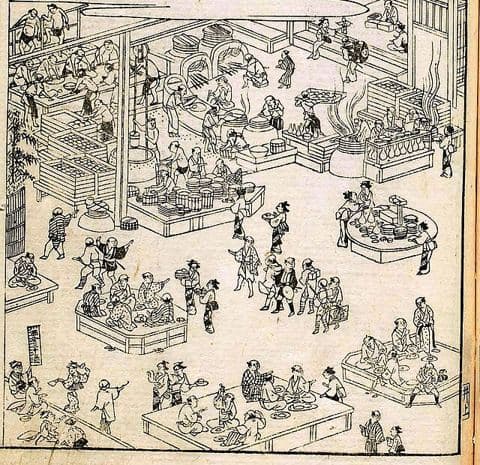
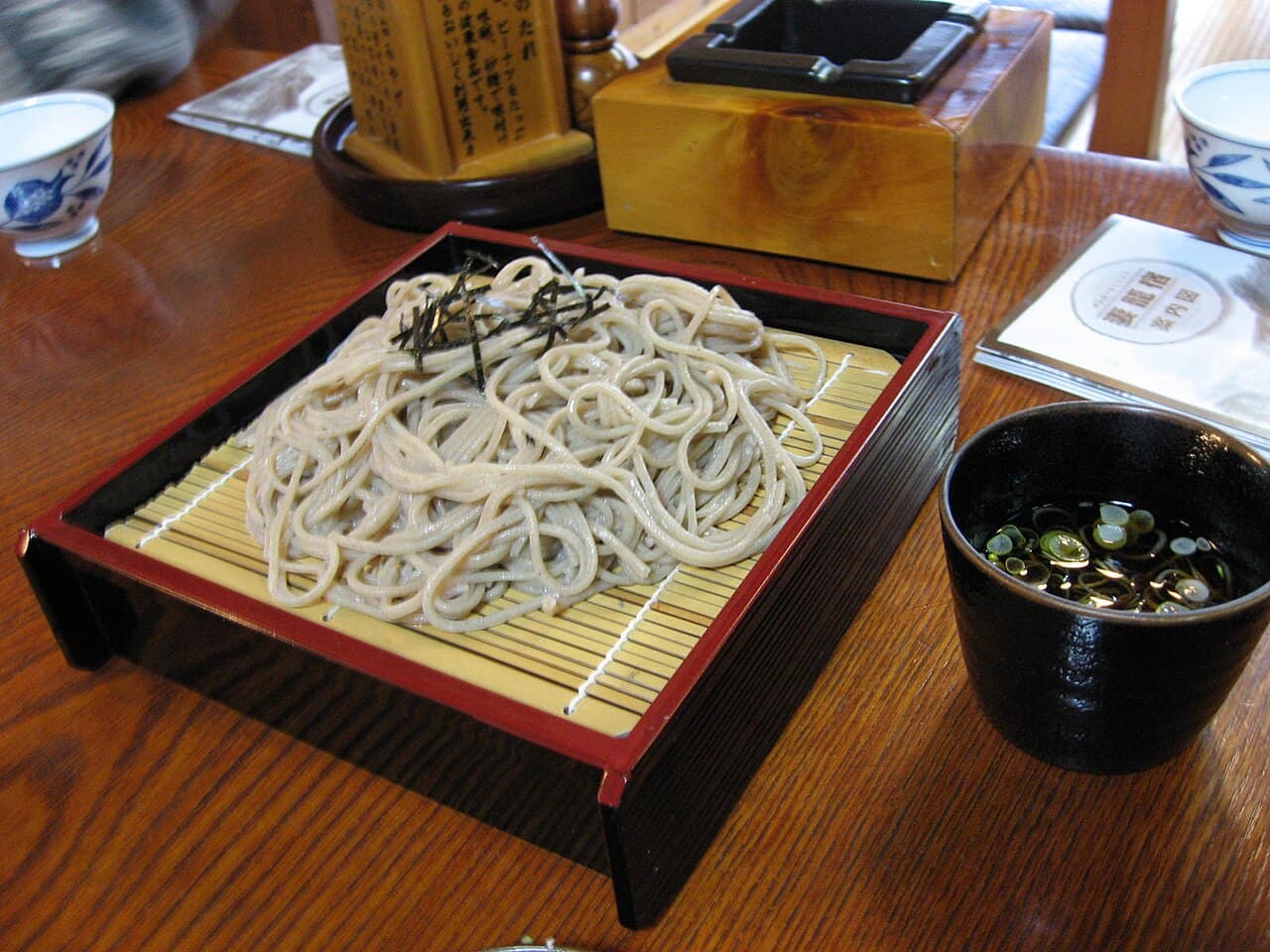
Soba is made from buckwheat, the seed of a plant in the knotweed family. Buckwheat is only distantly related to wheat. It contains no gluten.
The problem is that gluten is what holds a noodle together. Without gluten, buckwheat dough breaks easily and falls apart in the boiling water. So most shops mix in wheat flour as a binder. The most common style is ni-hachi (“two-eight”): two parts wheat flour to eight parts buckwheat.
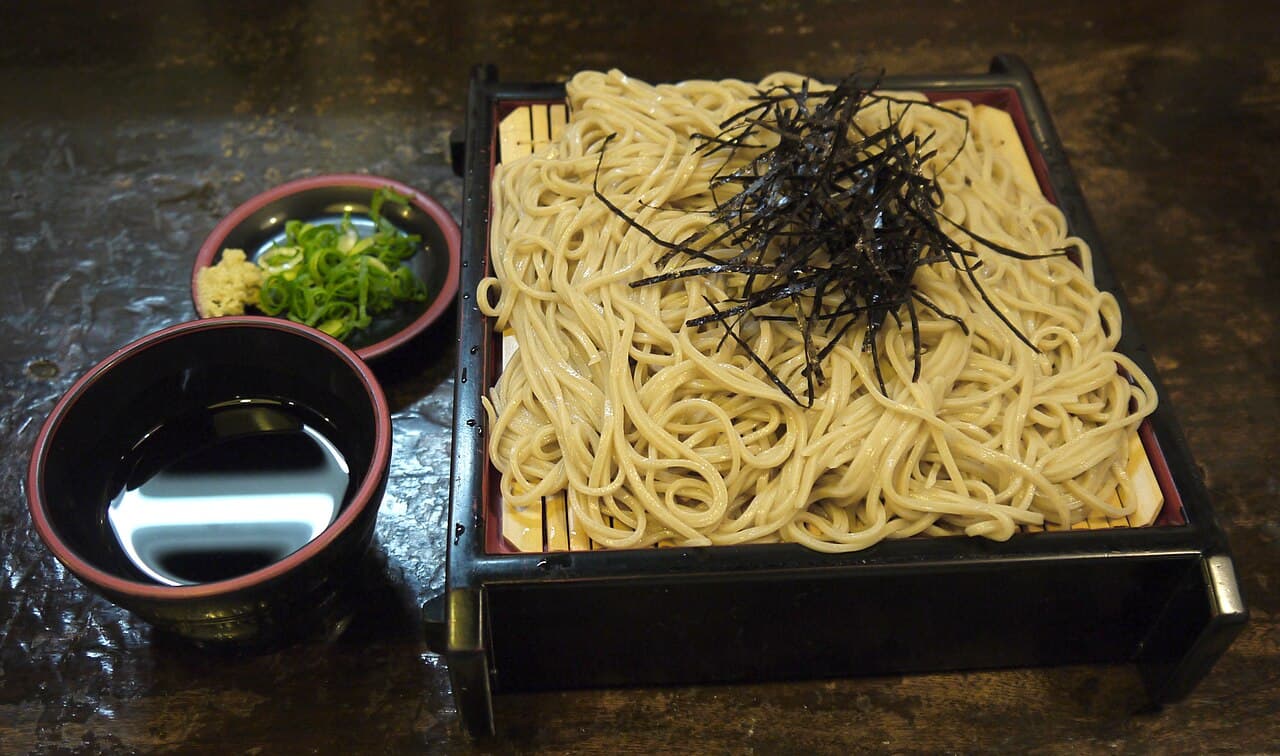
Soba made from buckwheat flour alone is called juwari (“ten parts”). It is hard to make, and shops that serve it usually say so on the menu or the sign. If the menu just says soba, assume it contains wheat. Some dried soba in supermarkets has more wheat flour than buckwheat. Check the ingredient list.
Is juwari soba gluten free? Where else wheat gets in
You will often read that “juwari soba is gluten free.” For the noodles, that is true. But in one serving of soba, there are at least five other places where wheat can get in.
| Where | Does wheat get in? | What to ask |
|---|---|---|
| Noodles | Ni-hachi: about 20%. Juwari: no | Is it juwari? |
| Dusting flour (uchiko) | Usually buckwheat. Some shops use rice flour or starch, rarely wheat flour | What is the dusting flour? |
| Dipping sauce (tsuyu) | Almost always (soy sauce is made with wheat) | Can I have it with salt? |
| Boiling pot | Many shops share it with udon | Is it the same pot as udon? |
| Soba-yu (the noodle water) | Same as the pot (it is the cooking water) | (Decide from the pot answer) |
| Toppings | Tempura batter, tenkasu (fried batter bits), sweet simmered fried tofu | Which toppings use no wheat and no soy sauce? |
The one people miss most often is the dusting flour. It is the flour shaken over the rolled dough and the cut noodles so they do not stick. It is usually a fine buckwheat flour called hanako. But some shops use rice flour, starch or cornstarch instead. Wheat flour makes the boiling water cloudy, so it is said to be a poor choice for soba. Still, I cannot say it is never used.
And if a shop buys its noodles from a noodle maker, the staff may not know what the dusting flour is. A part-time worker is even less likely to know. “I don’t know” is a common answer, and it is a clue in itself. I wrote about how to read a shop’s “it’s fine” (daijoubu desu) in how to explain food allergies at restaurants in Japan.
One more thing: wheat is not the only binder. Depending on the region or the shop, soba may use egg (tamago-kiri), yam (yamaimo), or funori seaweed, as in hegi soba, a local soba of Niigata. If you have an egg allergy, ask about the binder too.
Soba history: from temple noodle to Edo fast food
Buckwheat grows in cold, poor mountain soil where rice will not grow. For a long time, people ate it as sobagaki (a buckwheat mash) or as dumplings. The oldest reliable record of soba-kiri, buckwheat cut into noodles, is from 1574, at Josho-ji temple in Kiso, Nagano. Nagano is also where I was born.
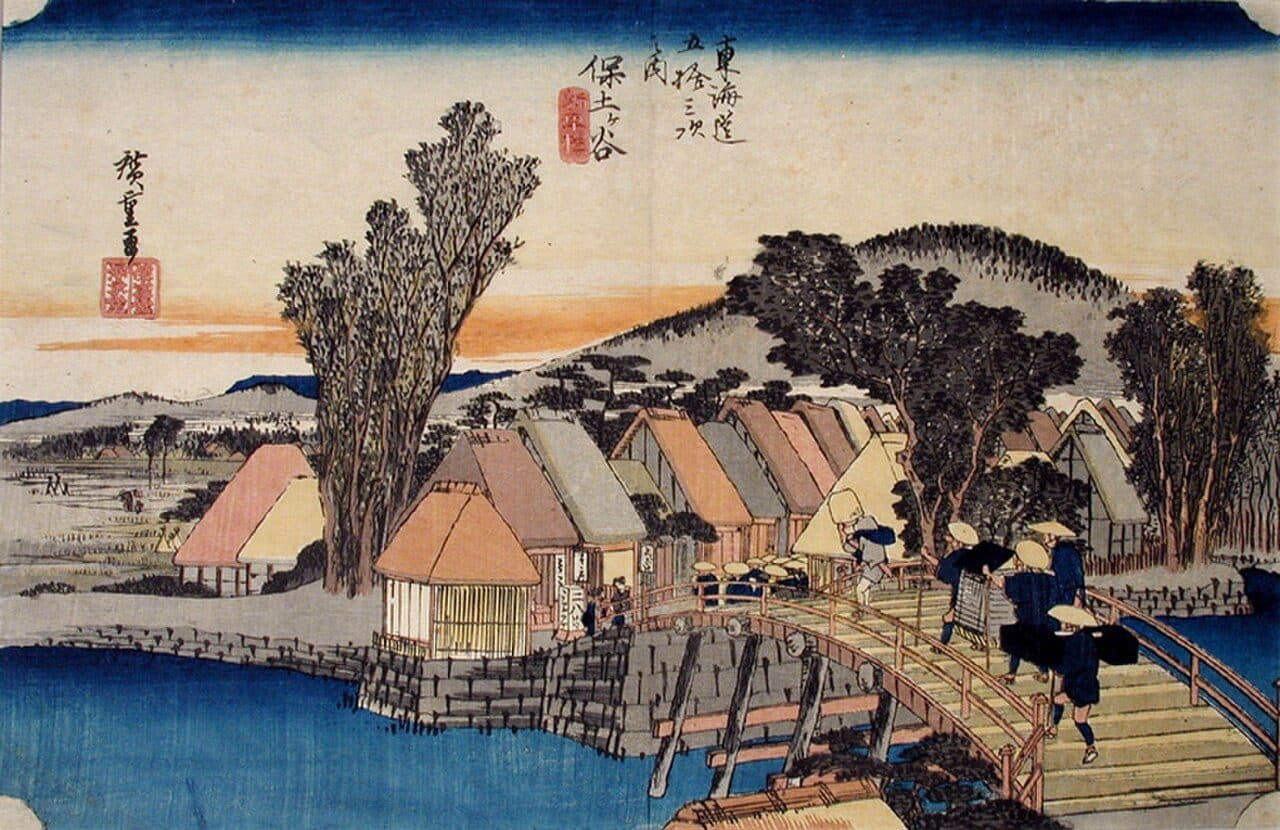
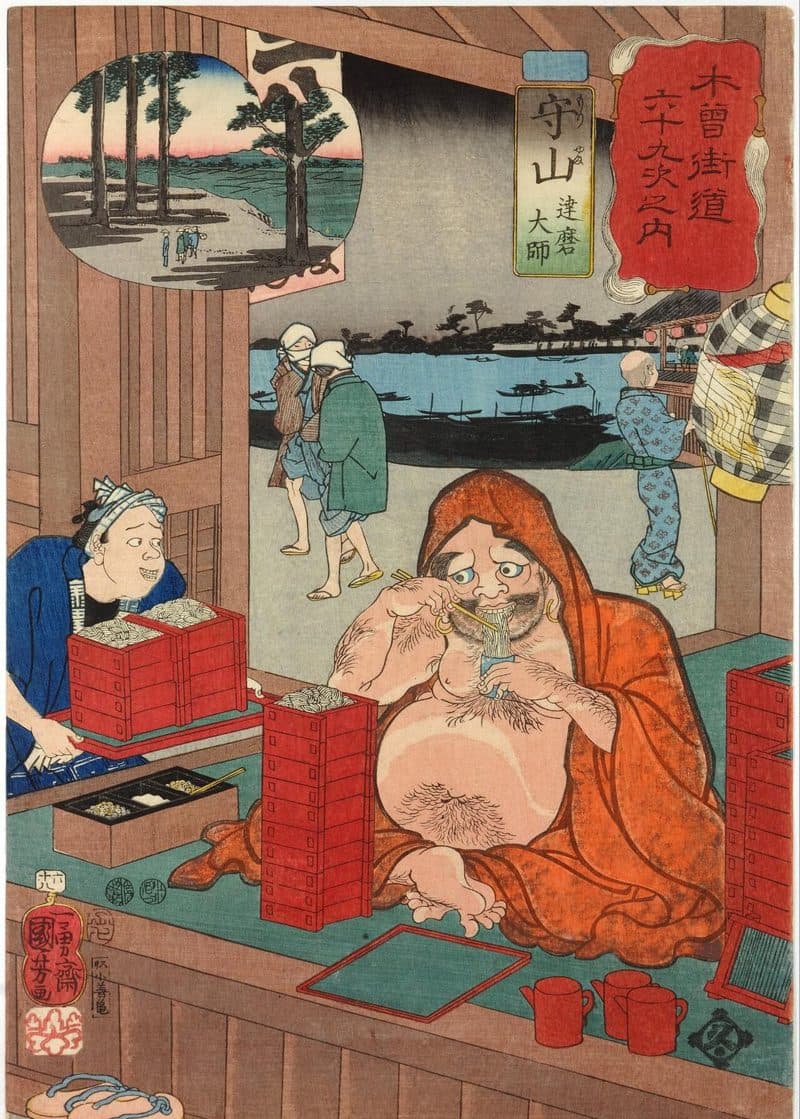
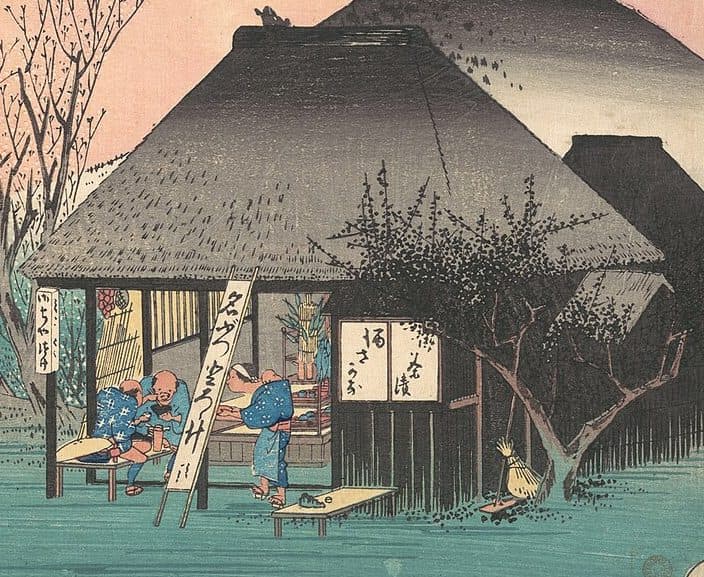
In the 1600s, soba reached Edo, the old name of Tokyo. Edo grew to more than a million people, and many of them were men who worked alone in the city. Soba became their fast food. It was sold in shops, at street stalls, and by peddlers who carried a whole kitchen on a pole over their shoulders.
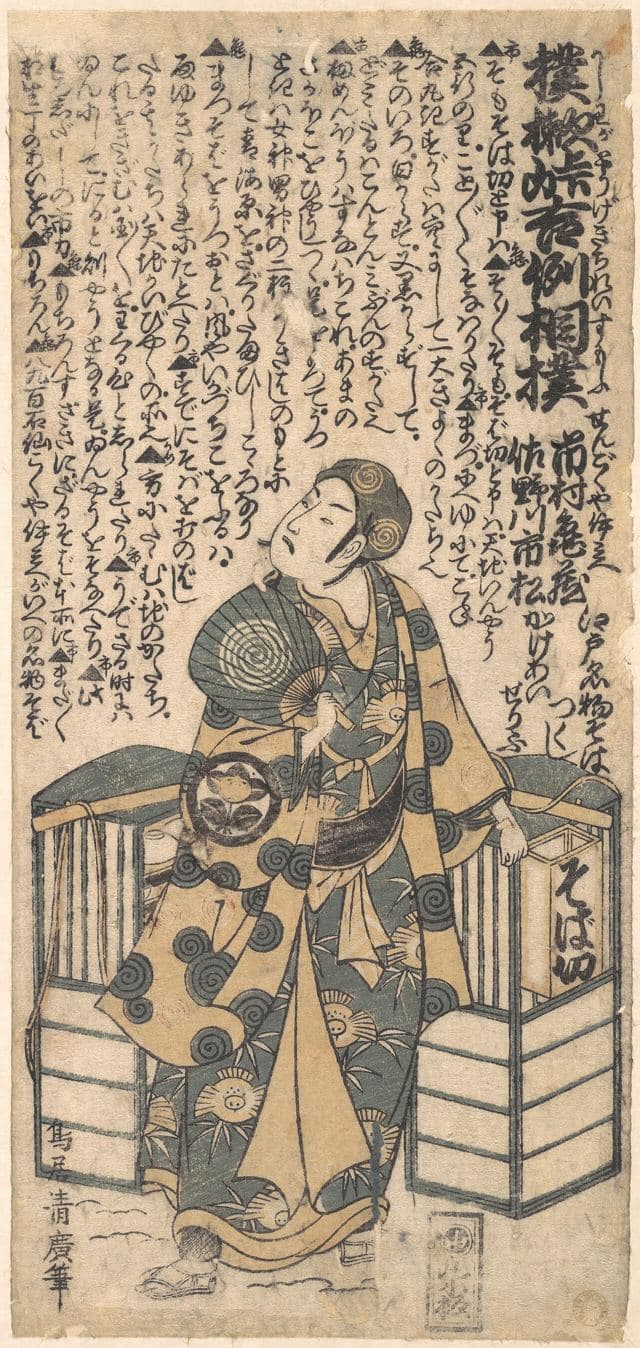
The sauce changed with the city, too. Until the 1500s, it was tare-miso, a sauce made from miso, with dried bonito (katsuobushi) added. In the 1600s and 1700s, it became bonito dashi seasoned with tamari soy sauce and sake. From the late 1700s, a sweet and salty sauce of dashi, soy sauce and mirin spread, and that is the Tokyo taste today. Once soy sauce became the main seasoning, wheat became a standard ingredient of the sauce. Almost all Japanese soy sauce is brewed from soybeans and wheat (see soy sauce and gluten in Japan). The same soy sauce problem appears in sukiyaki’s warishita sauce.
Standing soba, soba shops and dried soba at home
Edo’s fast food is still here, in a new form: tachigui soba (“standing soba”) on train platforms and outside stations. You buy a meal ticket from a machine, pick up your bowl at the counter, eat standing up in a few minutes, and leave. For a short morning or lunch break, it is still one of the meals Japanese office workers rely on most.
I have one bowl I will never forget. Before I started WE TABLE, I worked at Hakuhodo, an advertising agency. My office was in central Tokyo, in a building connected to Akasaka station. In those days, working past the last train was not unusual. Right in front of the building was a standing soba shop that stayed open until morning. After work, I would eat a hot bowl of tentama soba, topped with kakiage (a mixed tempura fritter, often vegetables, sometimes with small shrimp) and a raw egg. That was my usual.
In my view, what quietly keeps Japanese office workers going is not set meals, ramen, burgers or rice balls. It is this standing soba. Looking at it now, though, tentama soba is a bowl of wheat, egg and soy sauce all at once. For people with dietary restrictions, it may be the hardest bowl of all.
At the other end are soba-ya, soba restaurants that serve handmade juwari or ni-hachi, where you take your time over sake and small dishes. Both are called “soba,” but they are almost different foods.
Seen through dietary restrictions, the gap is even bigger. Standing soba noodles often have a high share of wheat. They are boiled in the same water as udon, and the tempura is fried ahead in the same oil. For people who need to avoid cross-contact (traces picked up during cooking), these are the hardest places. A soba restaurant is where you have a better chance of being heard.
Soba has one more face: dried noodles at home. Japanese supermarkets have shelves of dried soba. People boil it quickly for a dinner alone or a simple family lunch, and eat it with bottled mentsuyu (noodle sauce). Soba is an everyday food in Japanese kitchens, not only in restaurants. But as I said above, some dried soba contains a lot of wheat, and mentsuyu contains wheat from soy sauce. If you eat soba at home, choose juwari dried soba with no wheat on the ingredient list, and a sauce made without wheat.
Iki and soba-mae: how soba is enjoyed
The people of Edo saw iki, a kind of cool, effortless style, in the way you eat soba. You pick up mori soba (plain cold soba) quickly. You dip only the tips of the noodles in the sauce. Dunking them in too much sauce was thought uncool.
Soba restaurants also have soba-mae, “before the soba”: a glass of sake before your noodles. The small dishes include itawasa (fish cake with wasabi), toasted nori, tennuki (tempura floating in soba sauce, without noodles), and sobagaki, buckwheat flour kneaded with hot water. Even today, it is common to see someone drinking quietly alone at a soba restaurant in the afternoon.
For people with restrictions, sobagaki is an interesting dish. It is often made from just buckwheat flour and hot water, and needs no binder like noodles do. But it comes with soy sauce or soba sauce. The small dishes, such as itawasa and tennuki, can also contain soy sauce or wheat.
Toshikoshi soba and life’s turning points
In Japan, people eat toshikoshi soba (“year-crossing soba”) on New Year’s Eve. The custom is said to have started in the middle of the Edo period, and there are several stories about its origin. One says it came from misoka soba, which merchants ate at the end of each month. Another says people wished for a long life, like the long, thin noodles. Another says soba breaks easily, so it cuts off the hardships and bad luck of the year.
There was also hikkoshi soba (“moving soba”): when you moved to a new home, you gave soba to your neighbors. Ramen and udon have their own stories. Still, the noodle that has been closest to life’s turning points, like the end of the year or the start of a new life, may be soba.
Why is juwari soba still difficult?
When I spoke with a woman who has lived with a wheat allergy for more than ten years, she said this:
“Even when there’s juwari soba, there’s the risk of cross-contamination, so it’s difficult.”
Even shops that serve juwari may make ni-hachi or udon in the same kitchen and boil them in the same pot. Some shops will now use a separate pot if you ask. Even so, a soba kitchen is a room where flour floats in the air. However careful the owner is, the nature of the place itself is hard to change.
Can celiacs eat soba? Which line are you on?
In my book, I draw two lines. The same bowl can be fine for one person and not fine for another.
If you only need to avoid wheat as an ingredient, and minor cross-contact in the kitchen is not a problem for you, juwari soba can be an option. Ask if it is juwari and what the dusting flour is. Replace the sauce with salt, or with a gluten-free soy sauce you bring yourself. Whether you need to avoid soy sauce itself is something to decide with your doctor, not with this article.
If you need to avoid cross-contact too, as many people with celiac disease do, most soba shops do not meet that line. The shared pot and the flour in the air are part of how the kitchen works. Look for a shop that makes only juwari and boils it in separate, dedicated water, and ask the questions below before you sit down. If the answers are vague, be ready to skip it that day.
Buckwheat allergy in Japan and cross-reactivity
Buckwheat (soba) is one of the items that must be labeled on packaged food in Japan. The others are egg, milk, wheat, shrimp, crab, peanut and walnut. Cashew was added in April 2026, with transitional measures until March 2028. But this labeling duty does not cover restaurant menus, bento packed when you order, or side dishes sold loose (Japan’s allergen labeling rules).
Buckwheat allergy is known for causing severe reactions. A study of national hospital data in Japan looked at people admitted for food-induced anaphylaxis. Adrenaline was given on admission in about 40% of cases caused by egg, about 50% for wheat, milk and peanut, and more than 60% for buckwheat. Buckwheat allergens dissolve easily in water and are stable when heated. So people can react after eating udon boiled in the same pot as soba. Breathing in buckwheat flour or buckwheat hull dust can also cause asthma-like symptoms. For people with a buckwheat allergy, a soba shop is one of the hardest places to eat in Japan.
Cross-reactivity with other foods is not well studied, and much is still unknown (for other allergens, see the food allergy cross-reactivity chart). With that in mind, there are these reports:
- Tartary buckwheat (dattan soba) is reported to contain allergens similar to common buckwheat. It is used to make the roasted, fragrant dattan soba tea.
- Cross-reactions with latex, coconut and poppy seed have been reported as individual cases.
- There are also studies that looked at whether buckwheat and rice share allergens (cross-antigenicity).
If any of these apply to you, do not test them on your own. Talk to your doctor first, and check carefully.
Japanese phrases to use at a soba shop
You can show these phrases to the staff. Asking one question at a time makes it easier for them to answer honestly.
If the answer is “I don’t know,” that is an important answer too. It tells you how far that kitchen can go for you today.
How we approach soba at WE TABLE
We do not call any bowl of soba “safe.” What we can do is tell you what a kitchen does, and leave the decision to you. On the WE TABLE map, our crew members with dietary restrictions record what they ate and what the shop told them, restriction by restriction. We want to offer evenings where we ask all of these questions for you in advance, so that on the night you can simply enjoy your meal. That is JOURNEY (our guided dinners, with a course built around your restrictions).
Read next
Questions people ask
Is soba gluten free?
Buckwheat has no gluten, but most soba in Japan uses wheat flour as a binder. Common ni-hachi soba is about 20% wheat. Soba without wheat is basically juwari soba (a few shops use only non-wheat binders, such as yam or seaweed).
Can celiacs eat juwari soba?
Juwari soba takes the wheat out of the noodles. Gluten can still come from the dipping sauce, the dusting flour and the boiling pot, so check all three. Many soba shops cannot keep these separate.
Is soba sauce gluten free?
Usually not. Soba dipping sauce (tsuyu) is made from dashi, soy sauce and mirin, and almost all Japanese soy sauce is brewed with wheat.
Is buckwheat an allergen in Japan?
Yes. Buckwheat (soba) is one of the allergens that must be labeled on packaged food in Japan. Restaurant menus are not covered by this labeling rule.
Listen
The key points of this article, as a short video (about 2 min, AI voice).
Sources
- 消費者庁「食物アレルギー表示に関する情報」 (Consumer Affairs Agency: Food allergy labeling)
- 食品安全委員会「ファクトシート:そば(アレルギー)」 (Food Safety Commission of Japan: Fact sheet, buckwheat allergy)
- Thermo Fisher Scientific: Buckwheat allergen fact sheet
- Kikkoman Food Forum: The Japanese Table, Soba
- 農林水産省「ニッポン麺探訪」 (Ministry of Agriculture, Forestry and Fisheries: Exploring Japan’s noodles)
- 蔵の粉屋 大西製粉「蕎麦打ち用 打ち粉とは」 (Onishi Seifun: What is dusting flour for soba making?)
- 和樂web「年越しそばの由来」 (Waraku web: The origins of toshikoshi soba)
- Daiki Kobayashi, Gluten-Free Japan: Between the Kitchen and the Table (forthcoming)
- Muramatsu K, et al. Epidemiological Study of Hospital Admissions for Food-Induced Anaphylaxis Using the Japanese Diagnosis Procedure Combination Database. Journal of Epidemiology 32(4) (2022)
- Fujita Health University: Cross-allergenicity between rice and buckwheat antigens