
Is Sushi Gluten Free in Japan? It’s Not Just the Soy Sauce
 Daiki Kobayashi · Founder of WE TABLE
Updated · 12 min read

Is sushi gluten free?
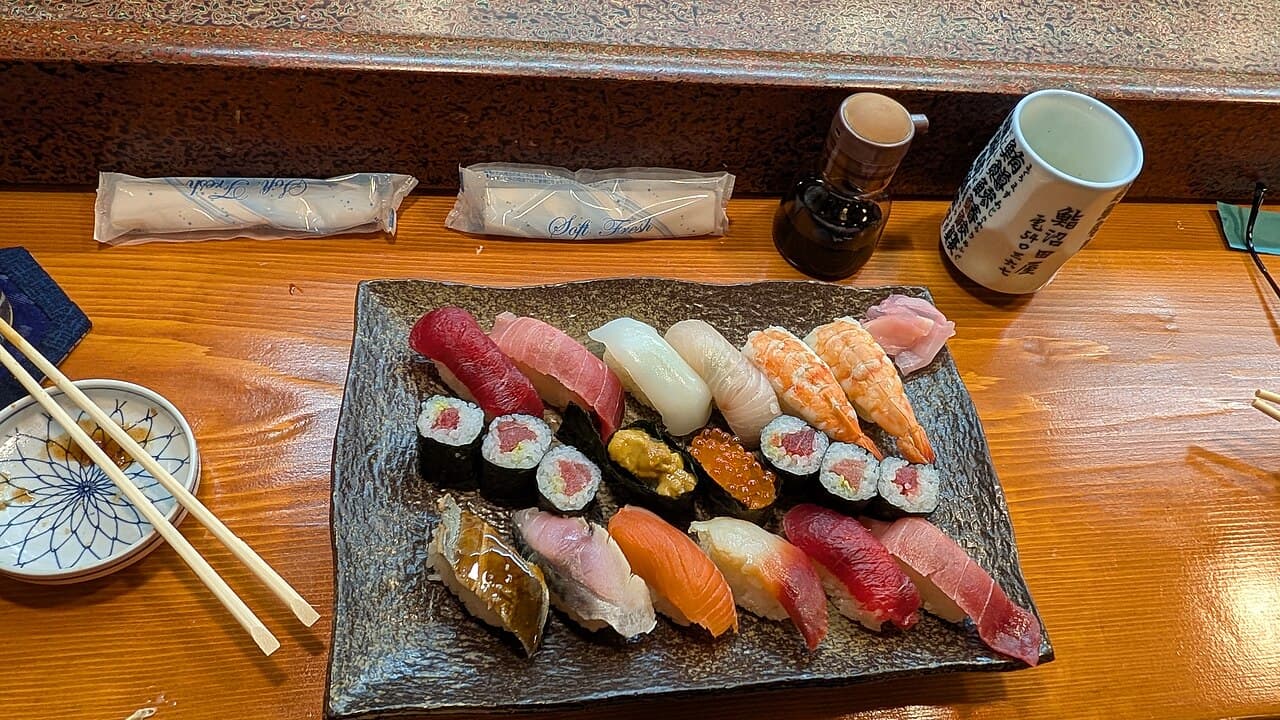
The basic ingredients of sushi are rice, fish, nori (dried seaweed) and wasabi. None of them contain wheat. So sushi looks like an easy food in Japan for people who avoid gluten. Many people think they only need to switch to gluten-free soy sauce.
But at a sushi counter, wheat can enter in other places too. Here is a quick overview.
| Where | What can bring wheat | Note |
|---|---|---|
| Soy sauce, nikiri, zuke | Wheat in soy sauce | In omakase, the chef often brushes nikiri on before serving |
| Tsume (sweet sauce for eel) | Wheat in soy sauce | Brushed on conger eel, eel, clams and more |
| Shari (sushi rice) vinegar | Wheat in grain vinegar | Depends on the shop. Rice vinegar or red vinegar usually has no wheat |
| Vinegar-cured fish, gari (pickled ginger) | Vinegar | Gizzard shad and mackerel are cured in vinegar. Gari is pickled in sweet vinegar |
| Tamago (rolled omelet) | Soy sauce, mirin, fish paste and more | Recipes vary a lot by shop |
| Inari, kanpyo (gourd strips), shiitake | Simmered in soy sauce | Used in rolls and inari |
| Imitation crab, fish cakes | Starch and seasonings | Depends on the product. Watch for allergens other than wheat too |
| Tempura, tenkasu (tempura crumbs) | Wheat flour, frying oil | Shrimp tempura rolls, rolls with tempura crumbs |
| Chawanmushi (egg custard), miso soup | Dashi, soy sauce, fillings, miso | Sometimes contains fu (wheat gluten) or kamaboko (fish cake) |
I wrote about soy sauce in detail in soy sauce and gluten in Japan. This article covers two things people often miss: the vinegar, and the cross-contact that is special to sushi restaurants.
Is gluten-free soy sauce enough for sushi?
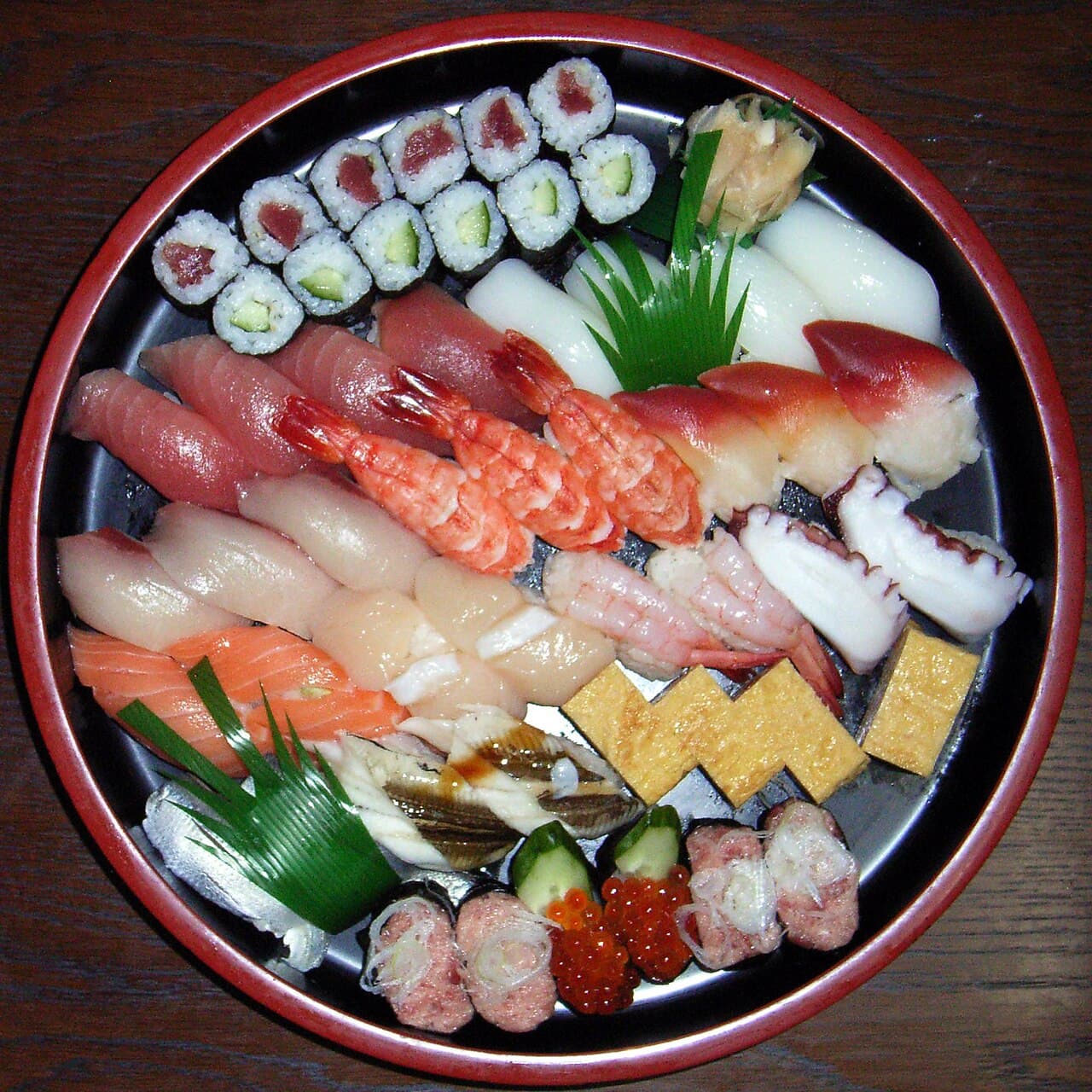
In omakase (the chef’s choice) at the counter, you often get no small dish of soy sauce. That is because the chef brushes nikiri onto the fish before serving it. Nikiri is soy sauce simmered with mirin or sake. Conger eel and eel get tsume, a sweet sauce. There is also zuke, lean tuna marinated in soy sauce.
So if you bring gluten-free soy sauce, it only goes in your own small dish. At the start, you need to ask the chef either to serve the sushi without nikiri or tsume, or to brush your own soy sauce on instead.
Is sushi rice vinegar gluten free?
Sushi rice is made by mixing cooked rice with awasezu (sushi vinegar): vinegar mixed with sugar and salt. This vinegar sometimes contains wheat.
In Japan, brewed vinegar is classified by its ingredients under a national standard called JAS.
| Type of vinegar | Ingredients | Wheat? |
|---|---|---|
| Rice vinegar (komezu) | At least 40 g of rice per liter (the standard does not forbid mixing in other grains) | Usually no (the standard allows other grains) |
| Black rice vinegar (kome kurozu) | Brown rice and similar (at least 180 g of rice per liter). Wheat or barley may be added | Sometimes added |
| Grain vinegar (kokumotsu-zu) | Grains such as rice, wheat and corn (at least 40 g per liter) | Some use it |
| Sake-lees vinegar (kasuzu, red vinegar) | Sake lees. Note: under JAS this is a type of grain vinegar, not its own category | Usually no |
| Fruit vinegar | Apples, grapes and so on | No |
For example, the ingredients of Mizkan’s grain vinegar are “grains (wheat, rice, corn), alcohol, sake lees.” Because it contains wheat, the label shows wheat as an allergen. But sushi served at a sushi restaurant, and takeout sushi packed when you order, have no such labeling duty (Japan’s allergen labeling rules).
So how much Japanese vinegar uses wheat? I searched, but I could not find any official statistics on the share of vinegar made with wheat. The best clue is some older production figures from the Ministry of Agriculture, Forestry and Fisheries. In 2006, Japan produced about 430,000 kiloliters of brewed vinegar. About 51% of it was grain vinegar. “Other grain vinegar,” meaning everything except rice vinegar, black rice vinegar and black barley vinegar, was about 34% of the total. This group also includes sake-lees vinegar. Wheat can be in this “other grain vinegar,” in black rice vinegar, and in sushi vinegar made from them. Not every grain vinegar contains wheat. Still, in a 2009 report from the Agriculture and Livestock Industries Corporation, a researcher at a vinegar maker (Mizkan) wrote that the most popular vinegar for sushi is grain vinegar made from rice, wheat, corn and other grains.
Some sushi restaurants mix their own sushi vinegar. Others use ready-made sushi vinegar from a manufacturer. A 2009 report estimated sushi vinegar production at 100,000 kiloliters, and more than 70% of it was for restaurants and food processing. As conveyor-belt and takeout sushi chains grew, more shops had manufacturers make their sushi vinegar. If the ingredient list of a sushi vinegar only says “brewed vinegar,” it may include grain vinegar.
Red vinegar in Edo-style sushi is made from sake lees
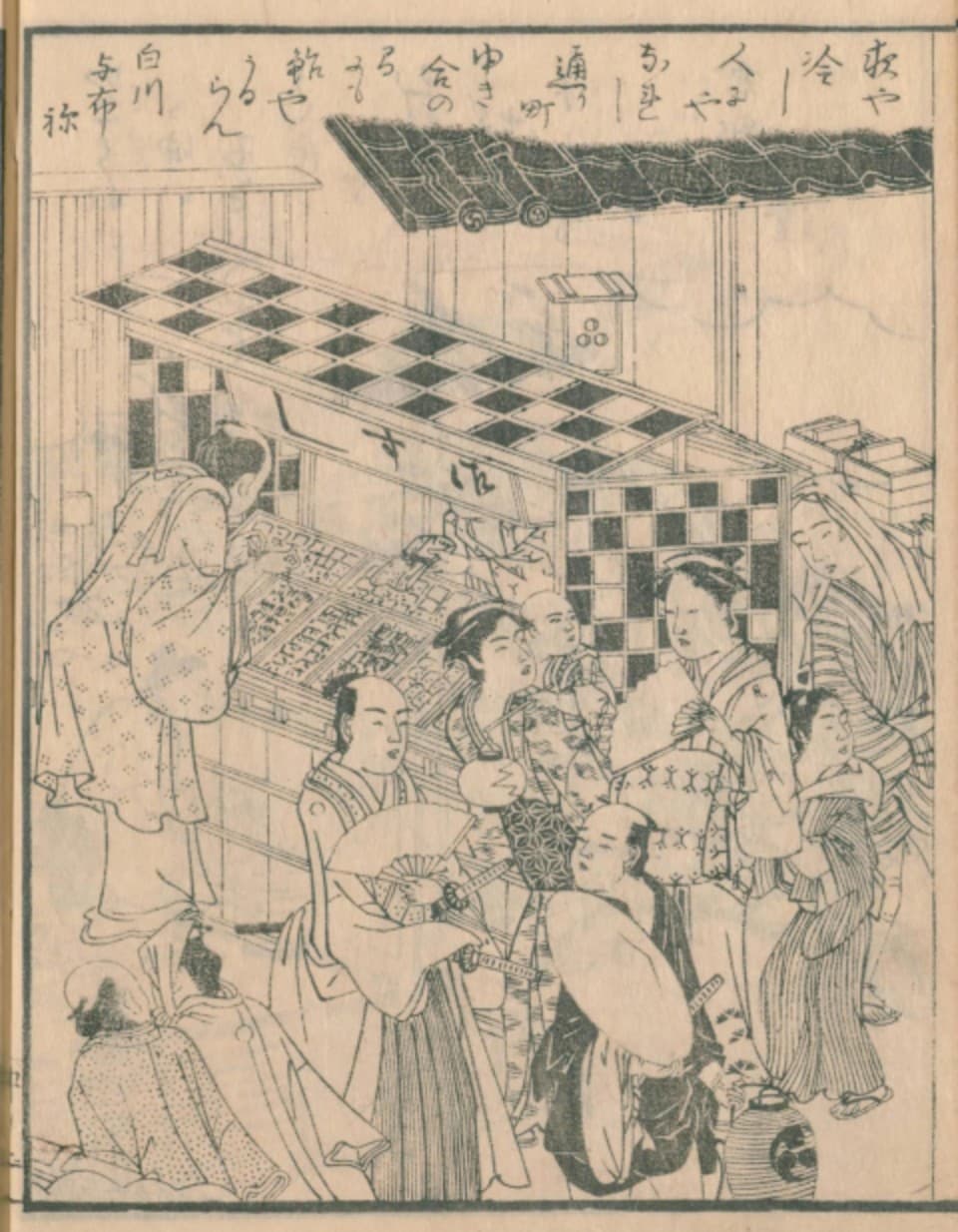
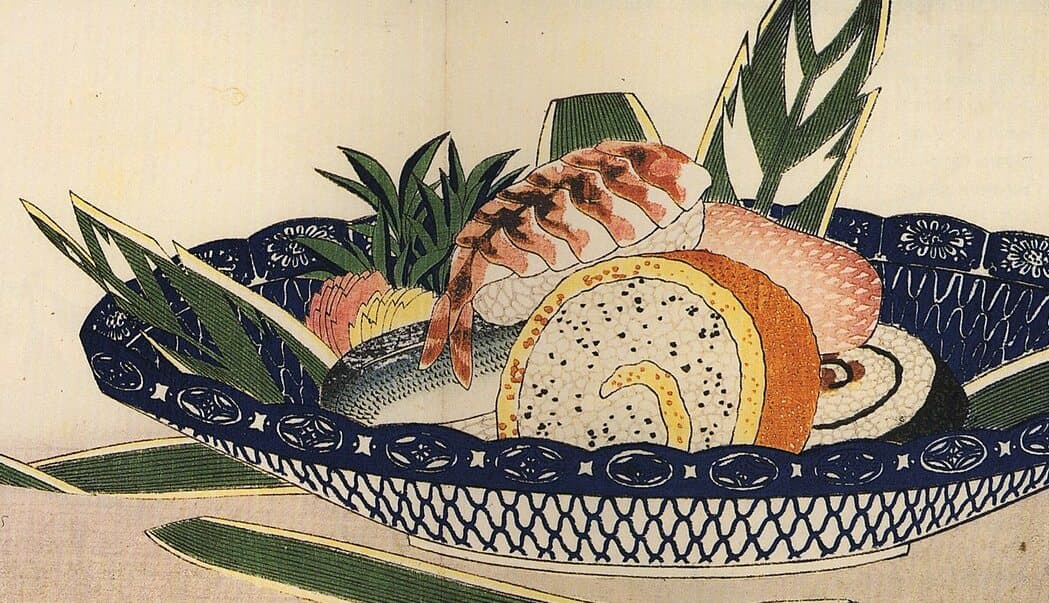
Nigiri sushi first took shape in Edo (old Tokyo) in the early 1800s. Around that time, a vinegar made from sake lees spread among Edo’s sushi shops. Sake lees are what is left after making sake. Nakano Matazaemon, a sake brewer in Handa in Owari (now Handa City, Aichi), made vinegar from sake lees and shipped it to Edo. He was the founder of Mizkan. Because of its reddish color, this sake-lees vinegar is also called akazu (red vinegar). It was cheaper than rice vinegar and became essential for Edo’s sushi shops.
Today, some Edo-style sushi restaurants still make their rice with red vinegar. Red vinegar is made from sake lees, so it usually contains no wheat. But many shops mix red vinegar with rice vinegar, and which vinegars they use, and how they mix them, differs from shop to shop.
Is the wheat in vinegar enough to matter?
Here the answer is different for people with a wheat allergy and people with celiac disease.
For people with a wheat allergy, Japan has a guideline. The allergy guideline for nursery schools from the Ministry of Health, Labour and Welfare (now published by the Children and Families Agency) says grain vinegar (other than rice vinegar and black barley vinegar) may contain wheat. But it also says vinegar has very little protein, about 0.1 g per 100 ml, and people use only a small amount at a time, so it can, in principle, be eaten. The same guideline says the wheat protein in soy sauce is broken down during fermentation, so people with a wheat allergy can, in principle, have soy sauce too. But that is only “in principle.” If you have a severe wheat allergy, ask your doctor whether you also need to avoid vinegar.
For people with celiac disease, countries take different views. I could not find any data measuring how much gluten remains in Japanese vinegar. The US Food and Drug Administration (FDA) says that in fermented or hydrolyzed foods, gluten cannot be reliably detected or measured by testing. So it judges these foods by whether the ingredients were gluten free before fermentation. Beyond Celiac, a US celiac disease organization, also says malt vinegar brewed from barley is not gluten free. On the other hand, Coeliac UK says even barley malt vinegar can be eaten if it has 20 ppm of gluten or less. Under the US view, grain vinegar brewed with wheat is not treated as gluten free. Under the UK view, it depends on the amount.
To give a sense of scale, here is one estimate of my own. If you eat 10 to 15 pieces in omakase, that is about 150 to 250 g of sushi rice. Home recipes use vinegar at about 5 to 8% of the cooked rice, so about 8 to 20 ml of vinegar. If vinegar has 0.1 g of protein per 100 ml, that is about 8 to 20 mg of protein. But this is protein from all the grains used, and we do not know how much of it is gluten. We also do not know how much fermentation breaks it down. For comparison, in a celiac disease study, people who ate 50 mg of gluten every day for three months showed changes in the small intestine. You cannot compare that directly with one meal. In my view, the wheat in vinegar is not zero, but there is also no way to check how much remains.
So I suggest that people with celiac disease ask about the vinegar in the rice. At a shop that uses only rice vinegar or red vinegar, the worry about wheat in the vinegar becomes much smaller. If the shop uses ready-made sushi vinegar, ask to see its ingredient list too.
Tempura, tamago, imitation crab: what else at a sushi bar has wheat?
At a sushi restaurant, the sushi itself is not the only thing to watch. Many sushi restaurants also serve tempura, tamago, chawanmushi and other dishes.
Tempura is fried in a wheat flour batter. If the batter is made on the same prep counter, flour can drift through the air. Some rolls, such as shrimp tempura rolls, have tempura inside. The frying oil is usually shared with other fried foods.
Tamago (rolled omelet) is made very differently from shop to shop. Some shops mix egg with dashi, sugar, mirin and soy sauce. Others, like some long-established sushi restaurants, add mountain yam, shrimp and white fish paste. Soy sauce brings wheat, and fish paste brings shrimp or fish. Some shops do not make their own tamago and buy it ready-made.
Chawanmushi is a steamed custard of dashi and egg, seasoned with soy sauce or salt. Fillings include shrimp, chicken, ginkgo nuts and kamaboko (fish cake). Some shops add fu, which is made from wheat gluten.
Imitation crab and other fish-paste products have very different ingredients depending on the product. For example, one Japanese brand of imitation crab contains egg, shrimp, crab and soy, but no wheat. Its label also says the same production line may handle other allergens. Other products do use wheat.
These dishes and the sushi may be made on the same cutting board, with the same knife and bamboo mat, by the same chef’s hands. Even after you check the soy sauce and vinegar, cross-contact is still an issue. If you need to avoid even minor cross-contact, ask when you book how far the kitchen can keep things separate.
Are nori and wasabi gluten free?
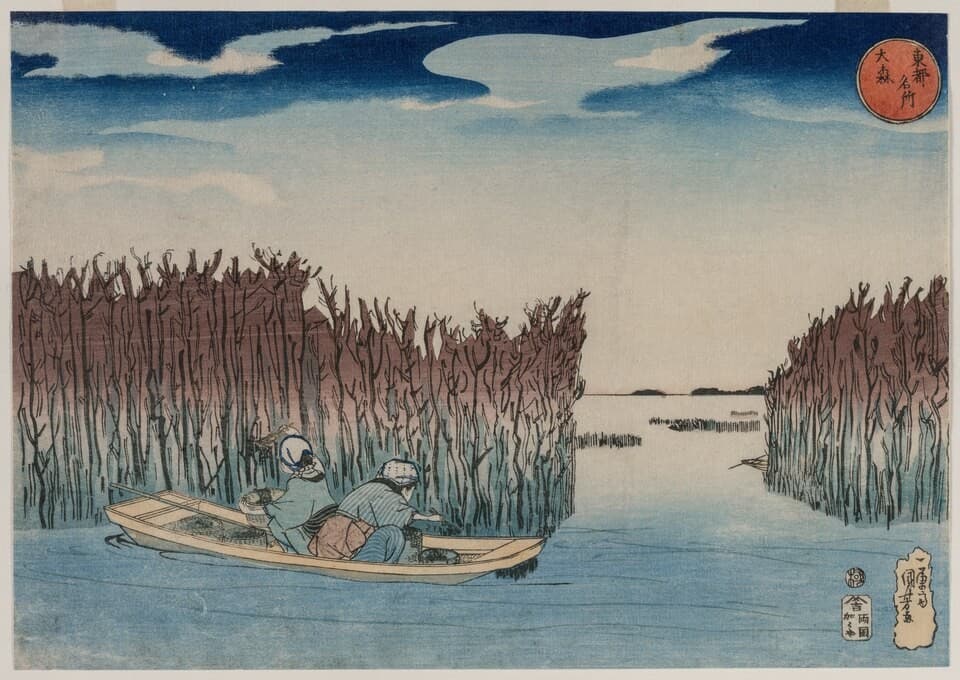
The toasted nori used for rolls is just seaweed that has been toasted, so it contains no wheat. But there is also ajitsuke nori, nori seasoned with soy sauce and mirin, so it is worth checking that the nori for rolls is plain toasted nori. Freshly grated real wasabi is just wasabi. Some shops use processed wasabi, such as wasabi from a tube, so ask if you are concerned.
Japanese phrases to use at a sushi restaurant
For the full approach, see how to explain food allergies at restaurants in Japan.
How we approach sushi at WE TABLE
People often think sushi is fine as long as you change the soy sauce. In reality, there is a lot to check: the vinegar in the rice, nikiri and tsume, tamago, and even tempura batter and oil. So at a sushi restaurant, we suggest you ask not just about “the soy sauce,” but about “the vinegar, the sauces and the other dishes” too. We do not say “it is safe.” What we can tell you is what we checked, and how far.
Read next
 Allergen chartBeta · being updatedJapan Allergen List 2026: 9 Mandatory Items vs 17 Countries
 DishesIs Japanese Soy Sauce Gluten Free? Tamari, White, Wheat-Free
 DishesAre Barley, Rye and Oats Gluten Free? Barley Tea in Japan
 How to askFood Allergies in Japan: What ‘Daijoubu Desu’ Really Means
 How to askDoes Japan Have a Gluten-Free Standard? Japan vs US and EU
Questions people ask
Is sushi gluten free?
The basic ingredients (rice, fish, nori and wasabi) have no wheat. But soy sauce, nikiri, tsume (sweet sauce), tamago and inari often contain wheat, and the vinegar in the rice may be grain vinegar made with wheat. You need to check with each restaurant.
Is sushi rice gluten free?
It depends on the restaurant. Rice vinegar and red vinegar (akazu, made from sake lees) usually contain no wheat, but some grain vinegars use wheat, rice or corn, and these can be in ready-made sushi vinegar. Ask which vinegar they use.
Is grain vinegar a problem for celiacs or wheat allergy?
For wheat allergy, a guideline from Japan’s Ministry of Health, Labour and Welfare says vinegar has very little protein (about 0.1 g per 100 ml) and can, in principle, be eaten, but people with a severe wheat allergy should follow their doctor’s advice. For celiac disease, countries take different views. The US FDA says gluten in fermented foods cannot be reliably measured by testing, so it judges them by their ingredients before fermentation, while Coeliac UK accepts barley malt vinegar at 20 ppm gluten or less. I found no data measuring gluten in Japanese grain vinegar.
Is sushi gluten free if I bring gluten-free soy sauce?
Not always. Bringing gluten-free soy sauce is not enough, because in omakase the chef often brushes nikiri onto the fish, and tsume, tamago, inari and kanpyo are seasoned in advance. Also check the rice vinegar, and the flour and oil used for tempura.
Is tamago sushi gluten free?
It depends on the shop. Some make tamago with dashi, sugar, mirin and soy sauce, which brings wheat. Others add shrimp or white fish paste. Some shops buy their tamago ready-made, so ask what is in it.
Listen
The key points of this article, as a short video (about 2 min, AI voice).
Sources
- 農林水産省「醸造酢の日本農林規格」 (Ministry of Agriculture, Forestry and Fisheries: Japanese Agricultural Standard for brewed vinegar)
- 農林水産省 農林物資規格調査会 資料「日本農林規格の見直しについて『醸造酢』」 (MAFF JAS council paper: Review of the standard for brewed vinegar, 2008, production by type)
- 農林水産省 農林物資規格調査会 資料 (MAFF JAS council paper, 2013: brewed vinegar production in fiscal 2011)
- 農畜産業振興機構「寿司と合わせ酢のいまむかし」 (Agriculture and Livestock Industries Corporation: Sushi and sushi vinegar, past and present, 2009)
- ミツカン 穀物酢 商品ページ(原材料) (Mizkan grain vinegar product page: ingredients)
- 厚生労働省「保育所におけるアレルギー対応ガイドライン(2019年改訂版)」 (Ministry of Health, Labour and Welfare: Allergy guideline for nursery schools, 2019 revision; hosted by the Children and Families Agency)
- 食品安全委員会「ファクトシート アレルゲンを含む食品(小麦)」 (Food Safety Commission of Japan: Fact sheet on allergenic foods, wheat, 2024)
- U.S. FDA: FDA Issues Final Rule on Gluten-Free Labeling of Fermented and Hydrolyzed Foods (2020)
- Beyond Celiac: Is Vinegar Gluten-Free?
- Coeliac UK: Branston Pickle and Sarson’s vinegar are safe for those with coeliac disease
- Beyond Celiac: Is Sushi Gluten-Free?
- Catassi C, et al. A prospective, double-blind, placebo-controlled trial to establish a safe gluten threshold for patients with celiac disease. American Journal of Clinical Nutrition (2007)
- 半田市「MIZKAN ROOM」資料(中埜又左衛門と粕酢) (Handa City: MIZKAN ROOM, on Nakano Matazaemon and sake-lees vinegar)
- 三菱電機 クラブメ「すし飯」レシピ(合わせ酢の分量) (Mitsubishi Electric Club-Me: sushi rice recipe, vinegar amounts)
- Cleveland Museum of Art: Ōmori, from the series Famous Places in the Eastern Capital
- 高島屋「味百選」(老舗寿司店の玉子焼き) (Takashimaya Aji Hyakusen: tamagoyaki from a long-established sushi restaurant)
- 紀文食品 カニかま 商品ページ(原材料) (Kibun Foods imitation crab product page: ingredients)